Lasaea, Archaeological site near Fair Havens, Greece
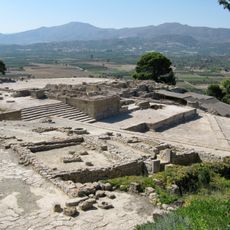
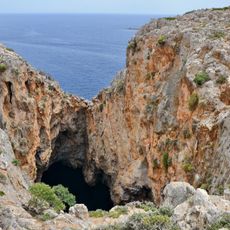
Lasaea is an ancient city and archaeological site on the southern coast of Crete, where remnants of stone structures and an ancient harbor are visible. The ruins spread across the beach and surrounding terrain, revealing the former importance of this port settlement.
Lasaea was one of the harbours of Gortyn, a small but apparently prosperous town. A Delphic city list of about 230/10 BC names it among poleis, yet an inscription from the late 2nd century BC records a Gortyn citizen, Zenas son of Apellonios, active at a nearby Asklepieion, suggesting dependence on Gortyn. The site was inhabited from the 4th–3rd century BC to the 5th century AD and never minted its own coins.
The name appears as Lasaia in a Delphi city list dated around 230/10 BC, and in the Bible as a polis where Paul's ship put in. Manuscripts vary: some read Lasea, others Alassa, and the Vulgate gives Thalassa. A base found at the site carries a dedication to the Egyptian goddess Isis.
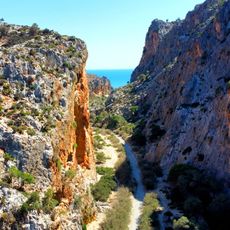
The ruins lie near Chrysostomos between Kali Limenes and Platia Peramata, south of the 467-metre Mount Liondaria and 6.6 km west of Lendas. The site has never been excavated, so paths are rough and overgrown. Look for the harbour warehouses whose walls still stand 3 to 4 metres high, and note that the sea level has risen about a metre since Roman times.
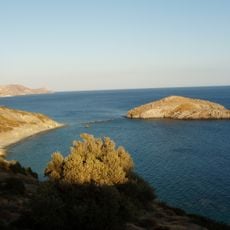
The ruins have never been excavated. They were identified as ancient Lasaia by Thomas Abel Brimage Spratt (1811–1888), and a field survey took place in September 1971. Part of the city was the small island Traphos, now Trafos, which served as a refuge during the 19th-century Greek uprising against the Turks.
The community of curious travelers
AroundUs brings together thousands of curated places, local tips, and hidden gems, enriched daily by 94,263 contributors worldwide.