Samothrace temple complex, Ancient religious sanctuary on Mount Hagios Georgios, Samothraki, Greece
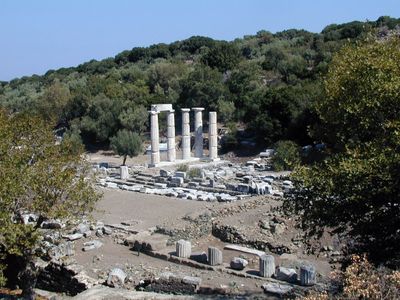
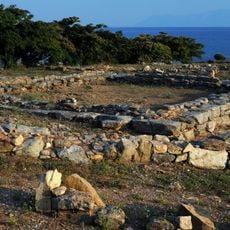
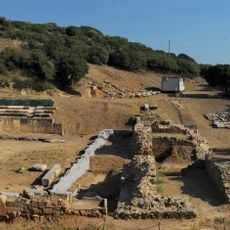
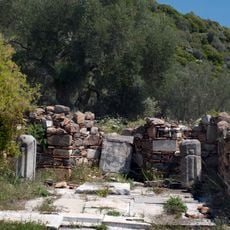
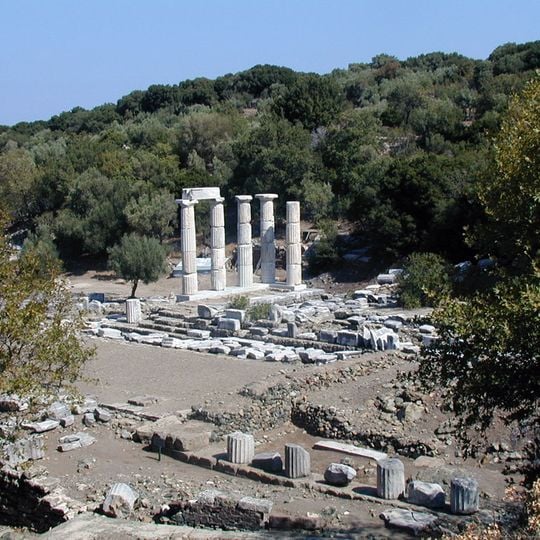
The Samothrace temple complex, the Sanctuary of the Great Gods, stands on the island of Samothraki just west of the ancient city walls. Its excavated ground holds broken stone blocks and column fragments; five fluted grey columns rise from stepped square bases, and a horizontal beam links the middle three capitals while the outer two stand free.
The complex took shape during the classical period and became particularly important during the Hellenistic era when kings like Philip II attended religious ceremonies. This royal participation strengthened the sanctuary's appeal across the entire Mediterranean region.
The Great Mother was called Axiéros, a name Herodotus let slip; initiates wore iron rings made from magnetic veins found on the site as signs of recognition. The head priestess, often a prophetess, was titled Sybil or Cybele. Each July the sanctuary staged a sacred drama of the search for the missing maiden and her wedding, and around 200 BC a Dionysian contest was added.
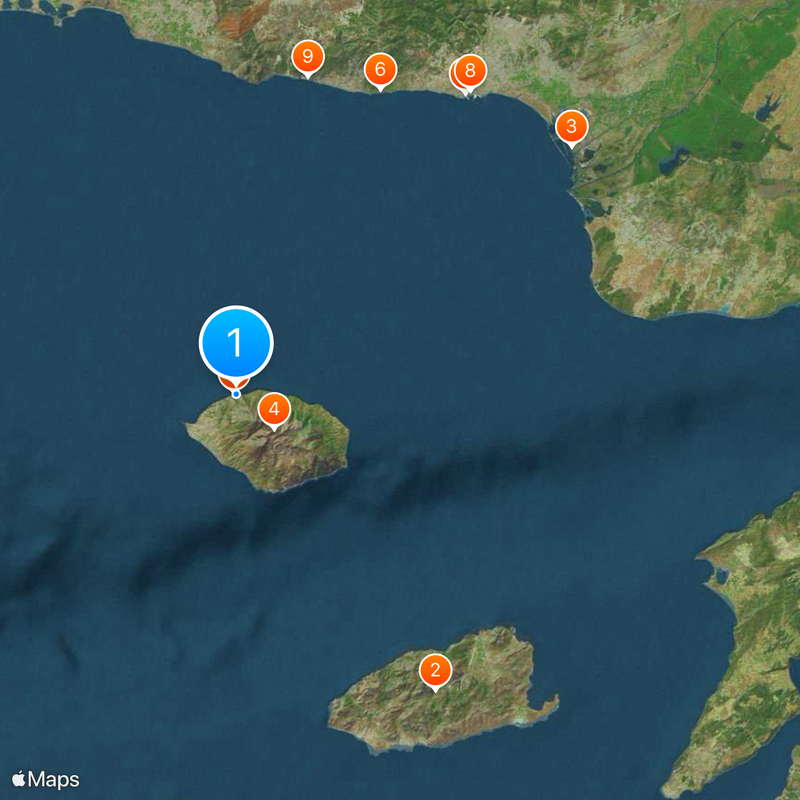
The sanctuary lies just west of the ancient city walls on Samothraki, reached by ferry from the mainland. The excavated ground is flat but strewn with broken blocks and column fragments, so watch your footing among the stones. The site is open to all, but the buildings of the mysteries were reserved for initiates.
The sanctuary's deities were never named aloud: ancient authors call them collectively "Cabeiri", while inscriptions on the site use only the title Great Gods. The Great Mother's secret name, Axiéros, is known because Herodotus, himself an initiate, let it slip. Her followers wore rings made from veins of magnetic iron as a sign of recognition, and several were found in the neighbouring necropolis.
The community of curious travelers
AroundUs brings together thousands of curated places, local tips, and hidden gems, enriched daily by 93,345 contributors worldwide.