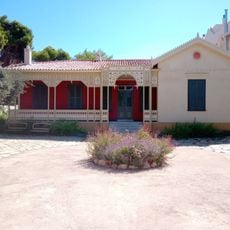
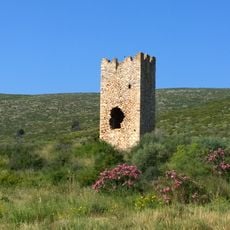
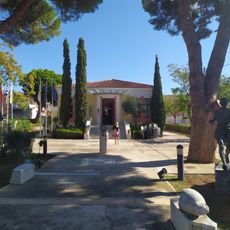
Aphidna, Ancient fortified settlement in East Attica, Greece.
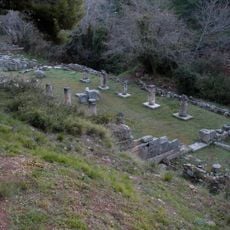
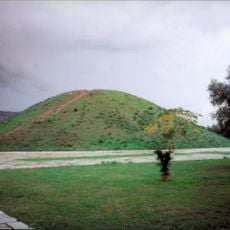
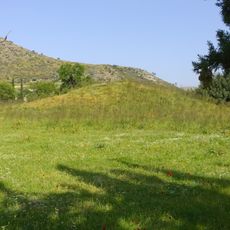
Aphidna was one of the twelve ancient towns of Attica, and its deme site lies at Kotroni near the modern town of Afidnes. Excavations there uncovered a Middle Bronze Age tumulus about 24 metres across, ringed by a stone circle of elliptical stones, with thirteen graves inside: five shaft graves, two cist graves and six pithos burials.
Aphidna was one of the twelve towns of ancient Attica and later an Attic deme, passing through the tribes Aeantis, Leontis, Ptolemais and Hadrianis. In 1894 Sam Wide and Heinrich Bulle found Mycenaean sherds, three tombs and a tumulus; Wide's trench revealed thirteen tombs, including five shaft graves and six pithos burials. The mound, about 24 m across with a stone circle, is dated to 2000–1600 BC, though Jeannette Forsén argued for EB II (c. 2700–2200 BC).
The settlement appears in Greek mythology as the place where Theseus hid Helen before the Dioscuri arrived in Attica to rescue her. This mythological connection remains part of how local tradition views the site.
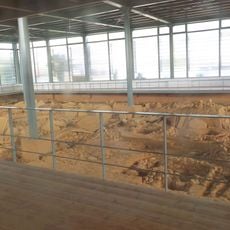
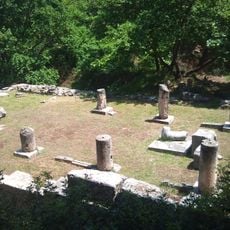
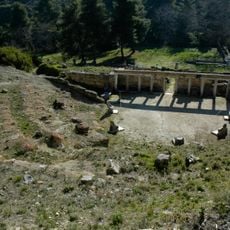
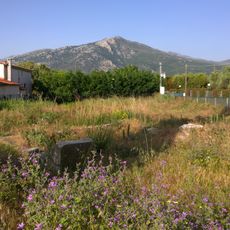
The ancient site is identified with the Kotroni hill between the villages of Kapandriti and Afidnes, both in the municipality of Oropos. Excavations by the University of Athens began there in 2005 and continue, so parts of the hill may be closed off. The ground is unexcavated hillside, and the walk up is on foot.
Aphidna belonged to the inland trittys of the Aiantis tribe, one of the three subdivisions into which each Attic tribe was divided. The deme sent 16 representatives to the Council of 500 in the first period (508–307/306 BC), and later 16 to the Council of 600. In the third period it was transferred to the Ptolemais tribe, and in the fourth and fifth to the Hadrianis.
The community of curious travelers
AroundUs brings together thousands of curated places, local tips, and hidden gems, enriched daily by 93,241 contributors worldwide.