Polyrrhenia, Archaeological site in Kissamos Municipality, Greece.
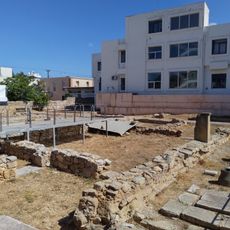
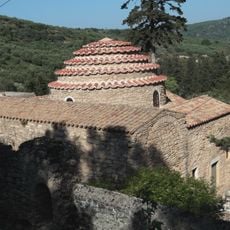
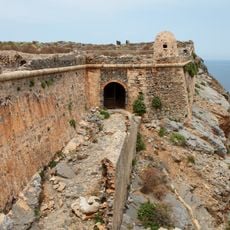
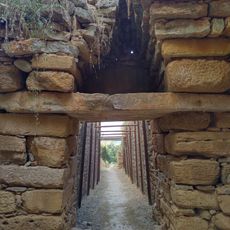
Polyrrhenia occupies the southwestern part of a steep hill rising to 418 metres above the village of Epano Palaiokastro, about 7 km inland from Kissamos. Its ruins are mainly Roman, with a stretch of Hellenistic wall, a large early Hellenistic cult building, and a rock-cut aqueduct visible on the modern village square beside a semicircular tower. A Byzantine castle stands on the ancient acropolis, its walls preserved to 3.5 m.
The settlement grew from scattered villages and became a unified city-state through consolidation by Achaeans and Lacedaemonians during the Archaic Period. This transformation marked the shift from dispersed communities to an organized urban center.
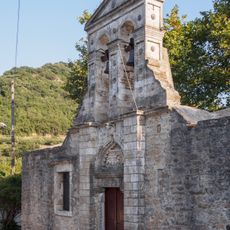
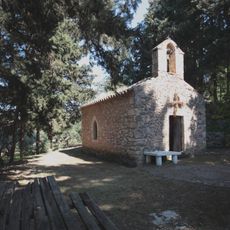
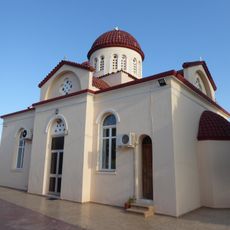
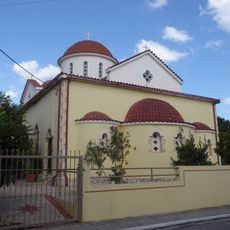
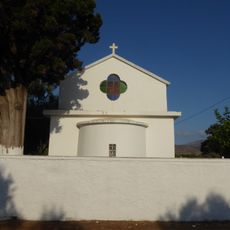
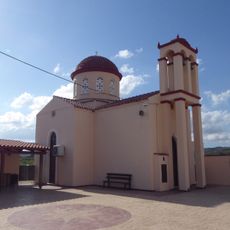
Polyrrhenia took its name from the ancient city and gave it to the modern village beside the ruins. The village church of the Ninety-Nine Holy Fathers, built in the late 19th century, incorporates ancient inscriptions from the 3rd to 1st centuries BCE into its walls. A rock-cut aqueduct is visible in the village square.
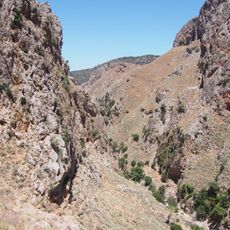
The ruins lie on a steep hill 418 metres high above the village of Epano Palaiokastro, about 7 km inland from Kissamos. The ground is uneven and the climb is steady, so allow time and wear sturdy shoes. The rock-cut aqueduct and a semicircular tower stand in the modern village square, while the walls and Byzantine castle are higher up.
A Roman aqueduct built during Emperor Hadrian's reign brought water to this elevated settlement, demonstrating Roman engineering skills. The structure shows how crucial reliable water supply was for the city to function and grow.
The community of curious travelers
AroundUs brings together thousands of curated places, local tips, and hidden gems, enriched daily by 94,658 contributors worldwide.