Castle of Koroni, Medieval fortress in Koroni, Greece
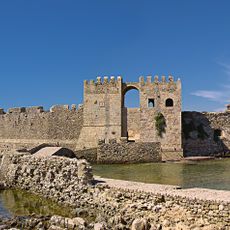
The Castle of Koroni stands on the Akritas cape east of today's town, on the site of ancient Asine's acropolis. Its walls form a near-triangular circuit with square towers and powder magazines. The Byzantine fort occupied the highest point, where a convent now stands; the Venetians added a large eastern enclosure and a double semicircular bastion facing the sea.
The castle was built in Byzantine times on the site of ancient Asine, and the Venetians took Koroni in 1206, with their rule confirmed in 1209 by the Treaty of Sapienza and in 1265 by Emperor Michael VIII Palaiologos. They added a large eastern enclosure, strong walls and a double semicircular bastion facing the sea. The Ottomans took the castle in 1500, Morosini retook it in 1685, and a French force under General Maison liberated it in 1828.
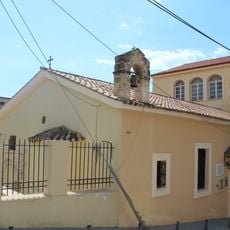
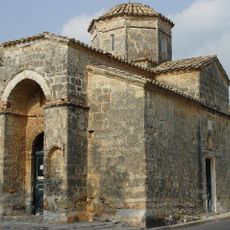
The name Koroni is said to come from a copper coin (kuruni) found while digging the foundations of the walls; another account names the first settler, Epimilides of Koroneia in Boeotia. Inside the walls stands the convent of the Timios Prodromos, founded in the early 20th century at the castle's western end, and the church of Agios Charalambos, built in 1689 as a Catholic church to Saint Roch and later turned into an Ottoman mosque.
Visitors can enter the fortress through several gateways that lead to different areas. It helps to explore the layout first since the site has multiple sections to discover.
The castle's name may come from a copper coin (kuruni) found while digging the foundations for its walls; another account says its first settler, Epimilides, came from Koroneia in Boeotia and named the site after his homeland. Look for the relief of the Lion of Saint Mark above the main gate, which survived until the Greek Revolution.
The community of curious travelers
AroundUs brings together thousands of curated places, local tips, and hidden gems, enriched daily by 93,173 contributors worldwide.