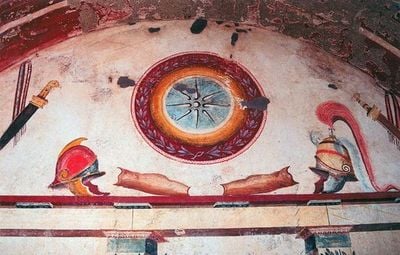
Tomb of Lison and Kallikles, Macedonian tomb in Lefkadia, Greece.
The Tomb of Lyson and Kallikles is a Macedonian tomb at Lefkadia with a facade decorated with rosettes and a pediment topped by acroteria. Two chambers on a north–south axis, an antechamber and a burial chamber, are covered by an earthen tumulus. The burial chamber measures 3.05 m by 3.95 m and 1.95 m high, with walls painted as Ionic pilasters supporting a Doric architrave with guttae.
The tomb was built around 250 BC for the brothers Lyson and Kallikles, sons of Aristophanes, and stayed in family use for about a century, falling out of use around the time of the Roman conquest. It was found by chance in 1942 and excavated by Charalambos Makaronas; Stella G. Miller published a full study in 1993.
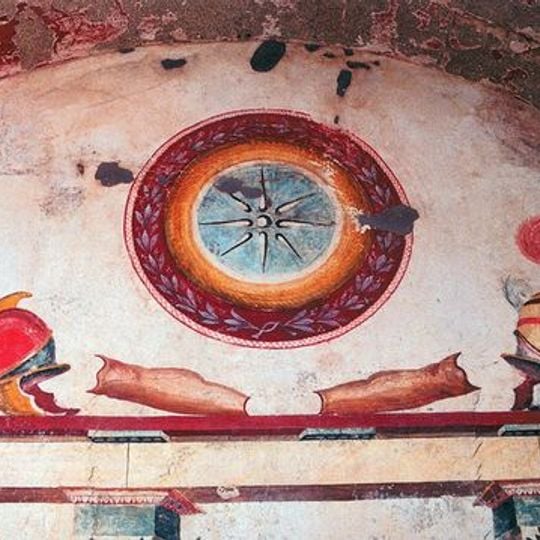
The painted walls feature military equipment, including a Macedonian shield bearing the Vergina Sun, which signals the high standing of this aristocratic family. These images provide a window into the wealth and values that mattered to them.
The tomb lies in Lefkadia, under a kilometre from the Tomb of Judgement and the Tomb of the Palmettes, so the three are usually seen on one outing. A metal shelter erected in 1999 covers the monument. The interior is closed to visitors, and the painted chambers can only be examined through publications or by permit.
The burial chamber has twenty-two niches in two rows, but only seventeen were ever used. Above them, painted garlands and ribbons accompany the names of the dead, beginning with Lyson and Kallikles and continuing through four generations. It is the only Macedonian tomb where the occupants' names survive.
The community of curious travelers
AroundUs brings together thousands of curated places, local tips, and hidden gems, enriched daily by 94,087 contributors worldwide.