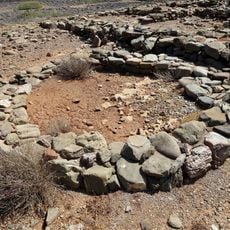
Minoan villa of Zakros, archaeological site in Greece
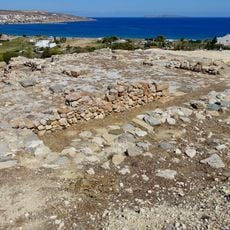
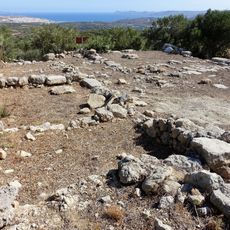
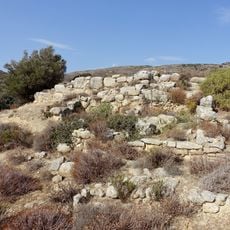
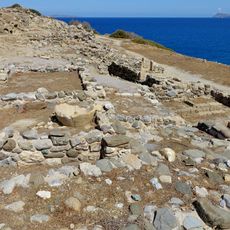
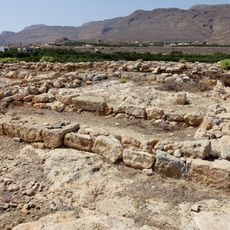
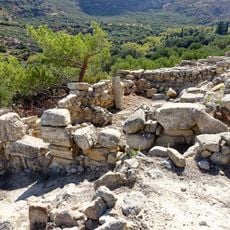
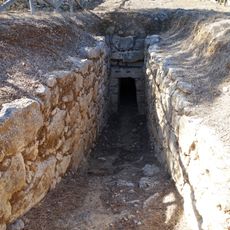
The Minoan villa of Zakros is an ancient dwelling site on Crete featuring residential rooms, storage areas, and a winepress. The ruins span multiple levels with visible wall remnants, decorated plaster surfaces, and large earthenware jars used to hold wine and provisions.
The building dates to the Late Minoan SM I period and was erected on at least three terraces on a hillside. David Hogarth first explored the site, recorded as Koukou Kefali 1, in 1901. Road construction in the mid-1960s led Nikolaos Platon, with Efi and Giannis Sakellarakis, to excavate further; Alexandra Karetsou followed in the 1970s.
The name "Minoan Villa" is a modern term for a building type of the Neopalatial period, not an ancient title. Finds point to storage and trade: eight large pithoi stood in a room of the middle level with a central column, and one jar carries a Linear A inscription beginning with the wine ideogram and a number, followed by Semitic-like words naming a guild master.
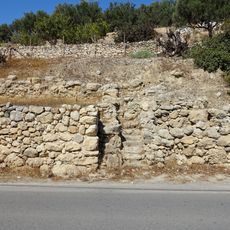
The asphalt road to Kato Zakros runs directly over the villa's upper terrace, so the ruins lie beside and below the roadway; watch for the excavated rooms at road level. The building was set on at least three terraces of a hillside, so expect uneven ground and steps between levels.
One of the eight large pithoi on the middle level carries two lines of Linear A. The text opens with the wine ideogram and the figure 21, then names Di-di-ka-se as supplier and A-se as the pithos provider; a second line reads as a delivery by Titikos to the guild master. Several words match Semitic terms.
The community of curious travelers
AroundUs brings together thousands of curated places, local tips, and hidden gems, enriched daily by 93,241 contributors worldwide.