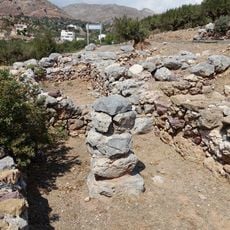
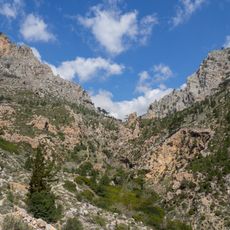
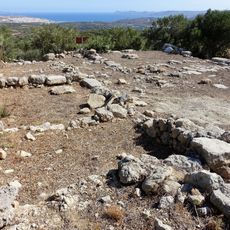
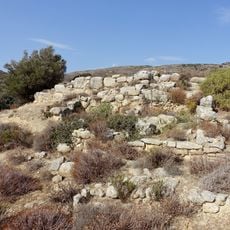
Kapsa Monastery, Orthodox monastery on southeastern coast of Crete, Greece
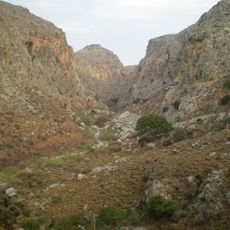
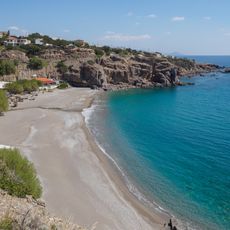
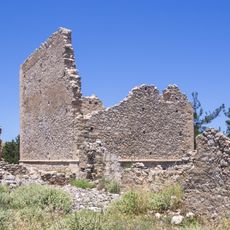
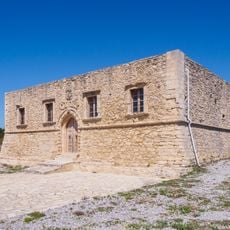
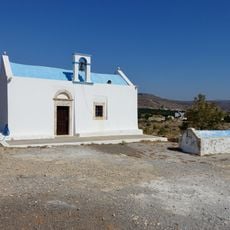
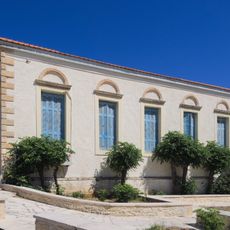
Kapsa Monastery, officially the Monastery of Agios Ioannis Kapsa, is a Greek Orthodox monastery for male monks built on a steep, rocky mountainside about 60 metres above the Libyan Sea, beside the exit of the Perivolakia gorge. Its katholikon is a two-nave, cave-like church dedicated to St. John the Baptist and the Holy Trinity, with a floor of pebbles set in patterns and religious symbols. The north wall and apse are the only parts surviving from the old monastery.
The monastery was destroyed by Ottoman pirates in 1471, but monk Joseph Gerontoyiannis began rebuilding in 1841 and established a new religious community. This reconstruction allowed the monastery to resume its role in the spiritual life of the region throughout the following decades.
The katholikon is a two-nave, cave-like church: one nave is dedicated to Saint John the Baptist, the other to the Holy Trinity. Its floor is made of pebbles set into patterns and religious symbols. On the north wall, graffiti inscriptions carry dates from 1552 to 1809; that wall and the apse are the only parts surviving from the old monastery.
The monastery is accessible during set hours and requires a walk down a steep path from the nearest parking area. Visitors should wear appropriate clothing for a religious site and be prepared for the physical demands of the approach route.
During World War II, the monastery sheltered Greek resistance fighters and British soldiers hiding from German occupation. This hidden chapter of its past makes it a significant site in local wartime history that many visitors overlook.
The community of curious travelers
AroundUs brings together thousands of curated places, local tips, and hidden gems, enriched daily by 93,685 contributors worldwide.