Kavousi Vronda, Archaeological site in Ierapetra Municipality, Greece
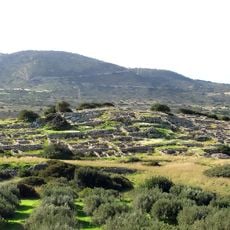
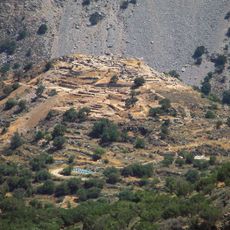
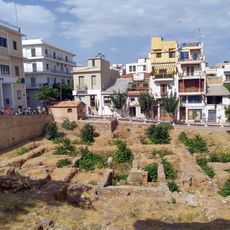
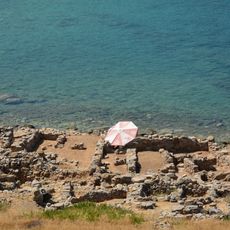
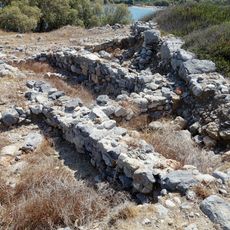
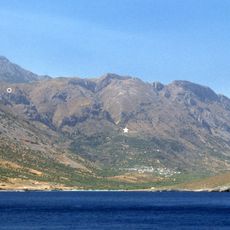
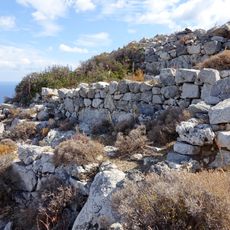
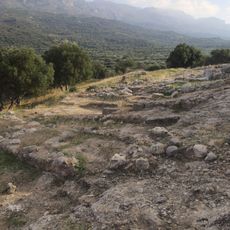
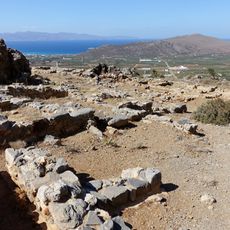
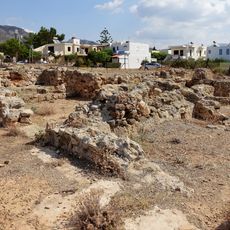
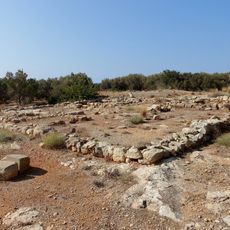
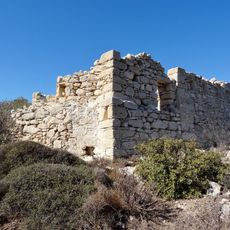
Kavousi Vronda is an archaeological site on a ridge at 427 m above sea level in eastern Crete, about 1.25 km south of the village of Kavousi. Visible remains belong to a Late Minoan IIIC settlement of about 20 houses, a large building on the summit, a shrine of the Goddess with Upraised Arms, and a kiln, with an Early Iron Age cemetery of eleven tholos tombs at the edges.
People lived at this location from the Neolithic through the Bronze Age, with the largest structures built during the Late Minoan period. The settlement later served mainly as a burial ground during the Iron Age.
The Late Minoan IIIC settlement included Building G, a freestanding shrine of the "Goddess with Upraised Arms", where a clay goddess figure with raised hands was found. Building A-B on the summit served as the leader's home and a place for ritual feasting and drinking. The site's name Vronda, "Thunder Hill", was given by archaeologist Harriet Boyd Hawes.
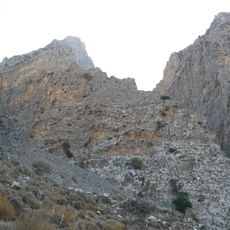
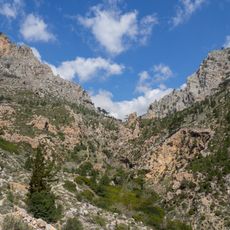
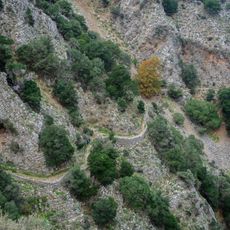
The site sits on a hillside and is accessible on foot, though it offers little shade on sunny days. Visitors should bring sturdy walking shoes and water, as it is a natural mountain location.
Eleven tholos tombs, Vronda I to XI, were cut into the edges of the abandoned settlement, but only two, Vronda IV and IX, were found unrobbed. The burials were inhumations, not cremations, placed in small corbelled stone chambers during the Subminoan to early Geometric periods.
The community of curious travelers
AroundUs brings together thousands of curated places, local tips, and hidden gems, enriched daily by 94,658 contributors worldwide.