Katalymata, Archaeological site in Lasithi Regional Unit, Greece.
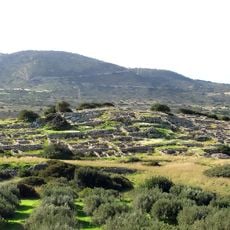
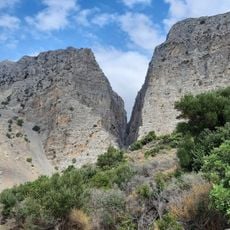
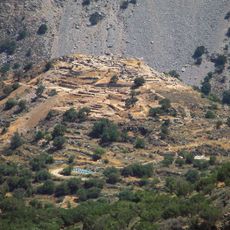
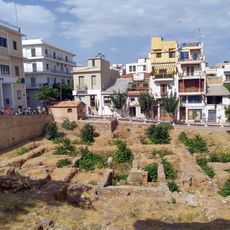
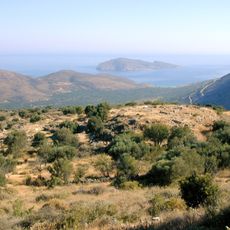
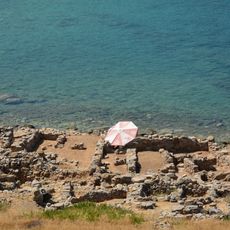
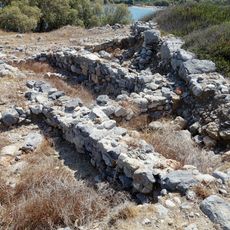
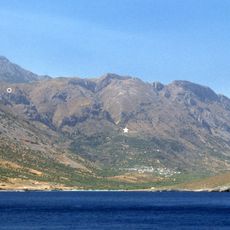
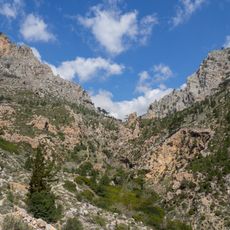
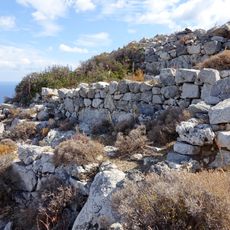
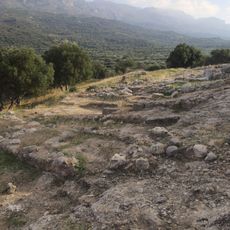
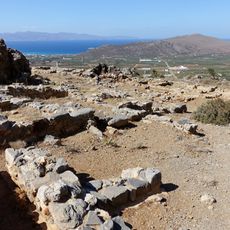
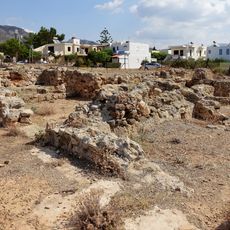
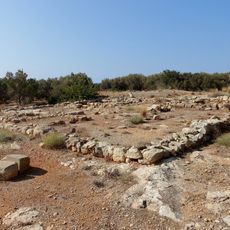
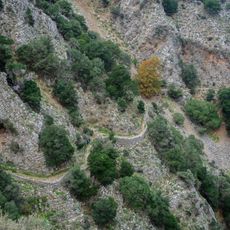
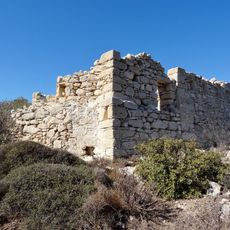
Katalymata is an archaeological site on a natural mountain terrace at the northwest end of the Cha Gorge, on the north side above its western exit, in the Thrypti Mountains of eastern Crete. Excavations focused on a structure labelled Building C, with rooms and floors recorded in detail. The terrace lies about 900 metres northeast of Monastiraki, above Pachia Ammos in the Ierapetra municipality.
Katalymata was first mentioned in the early 20th century by Harriet Boyd-Hawes, but excavation only began in 1993 under Krzysztof Nowicki, with Metaxia Tsipopoulou and William Coulson, linked to work at nearby Chalasmenos. Finds on the terrace span six periods, from the Neolithic around 3500 BC and Middle Minoan MM II around 1700 BC to Late Minoan SM III C around 1200–1150 BC, the late 7th century and the 16th–17th centuries.
The name Katalymata means "shelters" or "lodgings" in Greek, reflecting the site's use as a refuge. Excavations by Krzysztof Nowicki from 1993 uncovered six distinct occupation phases on the natural terrace, with Building C as the central structure. The site was first noted by Harriet Boyd-Hawes in the early 20th century.
Visitors should wear sturdy shoes and bring sun protection, as the ruins are spread across open ground with varying elevations. The terrain is uneven, so proper footwear is essential and you should allow time for walking around the site.
Krzysztof Nowicki called Katalymata a "refuge site", and its position explains why: the terrace sits on the north side above the western exit of the Cha Gorge, in the Thrypti Mountains, and is hard to reach. Excavations there from 1993, linked to work at Chalasmenos 350 m southwest, uncovered finds from six separate periods.
The community of curious travelers
AroundUs brings together thousands of curated places, local tips, and hidden gems, enriched daily by 93,844 contributors worldwide.