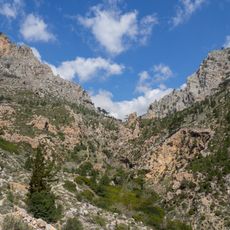
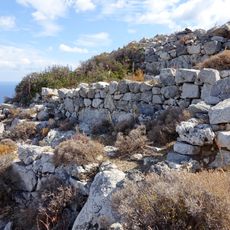
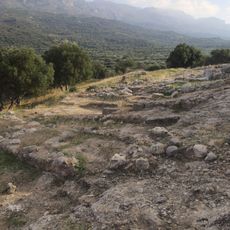
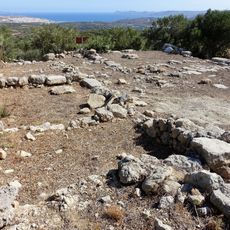
Mochlos site, Archaeological site on Agios Nikolaos islet, Greece
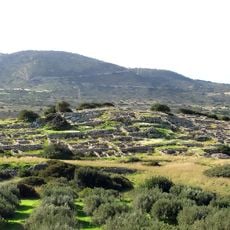
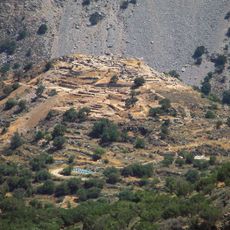
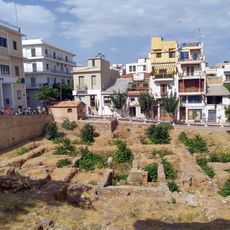
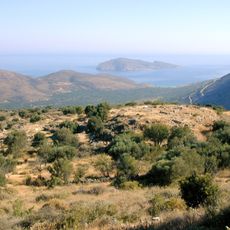
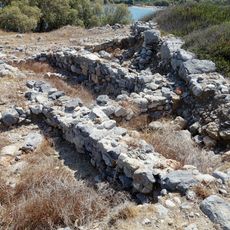
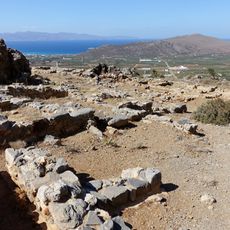
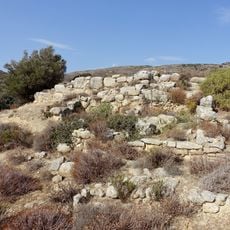
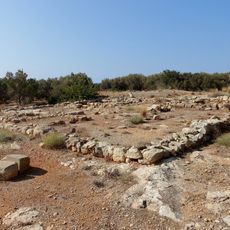
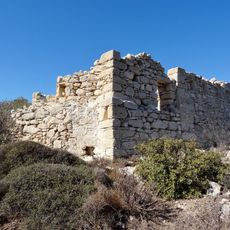
Mochlos is an archaeological site occupying an islet off Crete's coast that was once linked to the mainland by a thin land bridge. The site contains remains of dwellings, workshops, and burial areas spanning multiple periods of occupation.
The site was first settled around 3000 BC, when colonists from the Cycladic island of Melos arrived and worked imported obsidian. A second wave of settlers followed in the Early Minoan IB phase, and by the Early Minoan II phase the settlement covered about 0.8 hectares with an estimated 220 to 330 inhabitants. In the Middle Minoan Old Palace period (about 1900–1700 BC) Mochlos had close ties to the palace of Mallia, adopting innovations such as the potter's wheel.
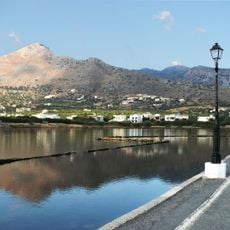
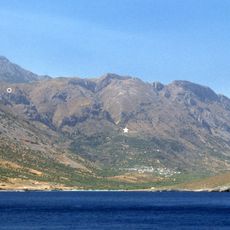
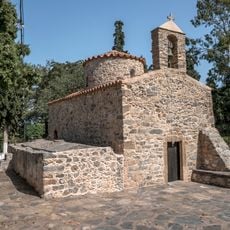
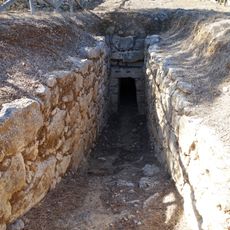
Mochlos was named after the small village that grew on the Cretan shore after the ancient harbour settlement was discovered in 1907; the islet itself is called Agios Nikolaos after the small church on its south side dedicated to Nicholas of Myra. In Venetian times the islet was known as Scoglio de Muflo, and it is sometimes called Psyllos, "flea", in contrast to Psira, "louse", 3.2 km to the west. The Early Minoan cemetery on a narrow terrace of the west side, laid out around 2900 BC, held family graves with numerous gold diadems.
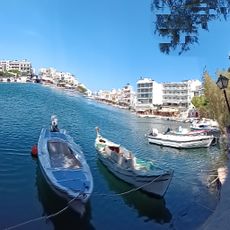
The site is only accessible by boat from a nearby harbor and is best visited during calm weather conditions. Paths can be uneven, so sturdy shoes are advisable and bringing water is important given the exposed coastal setting.
The site was once home to workshops processing obsidian imported from the distant island of Milos. This reveals how far-reaching the trade networks of this ancient community actually extended.
The community of curious travelers
AroundUs brings together thousands of curated places, local tips, and hidden gems, enriched daily by 93,043 contributors worldwide.