Anastasiopolis, Archaeological site and castle in Iasmos Municipality, Greece
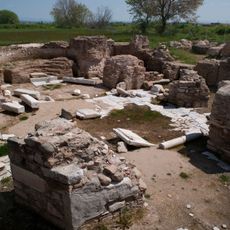
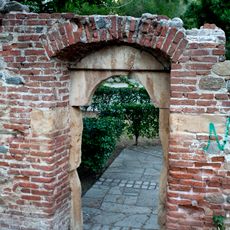
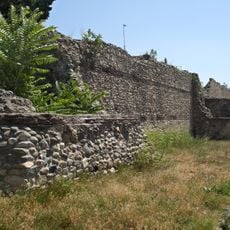
Anastasiopolis is a walled site of about 7.3 hectares southeast of Amaxades, with an irregular trapezoidal circuit whose longest side faces south. Round and square towers survive: four on the north and south sides, two on the west and one on the east. The main arched south gate, once leading toward the harbour, carries Palaiologan monograms of 1341.
Emperor Anastasius I established this fortified settlement between 491 and 518 AD as a strategic point along the Via Egnatia trade route. The site later changed hands and identities under different rulers over the following centuries.
The remains show how inhabitants built religious and defensive structures that reflected their way of life across centuries. Walking through the site reveals how people arranged their settlement to serve both spiritual and protective needs.
Stone walls of several meters in height are clearly visible throughout the area, with the easiest approach from the nearby village of Amaxades to the southeast. The surrounding forest provides natural shade but requires sturdy footwear for walking on uneven terrain.
The name Peritheorion is first attested in the 9th century, but it was not a renaming of Anastasiopolis: Patriarch Nicholas Mystikos records it as a separate city with its own diocese. The equation of the two goes back to John VI Kantakouzenos, who wrote in the 14th century that Andronikos III Palaiologos had renamed the city.
The community of curious travelers
AroundUs brings together thousands of curated places, local tips, and hidden gems, enriched daily by 93,896 contributors worldwide.