Dipylon, Ancient monumental gate in Kerameikos, Greece
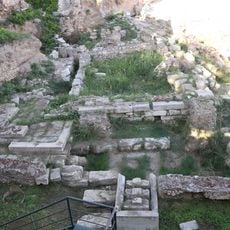
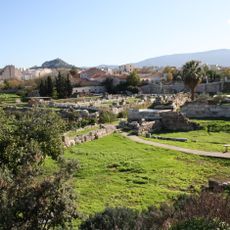
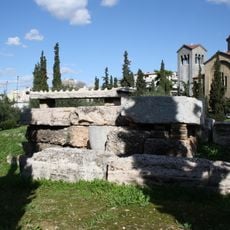
The Dipylon was the main gate in the city wall of Classical Athens, built in 478 BC as part of Themistocles' fortification. It covered about 1,800 square metres, with a trapezoidal plan, double gates set back from the wall line, and four corner towers. Its walls were of clay bricks on a Poros limestone base. It was rebuilt in the 300s BC and remained in use until the 3rd century AD.
The gate was built in 478 BC during Themistocles' fortification project and underwent major reconstruction between 307 and 304 BC using limestone blocks. This renovation strengthened its defensive role against repeated sieges throughout the city's history.
The gate's name, Dipylon ("Two-Gated"), was only given in the 3rd century BC; before that it was known as the Thriasian Gates, as it led toward the Thriasian Plain. The Panathenaic Way, laid out by the Pisistratids, ran from the gate to the Acropolis. Outside lay the Demosion Sema, the state cemetery for the city's most honoured citizens.
The gate is located within the Kerameikos site, which is easy to explore and shows several ancient structures across one connected area. Visitors should wear comfortable shoes and be prepared for uneven ancient terrain.
The Dipylon's walls carried graffiti such as love messages, as the 2nd-century AD writer Lucian reports. Excavations also found lead tablets marked with the price and owners of horses, probably a record of the Athenian cavalry, in a well at the gate.
The community of curious travelers
AroundUs brings together thousands of curated places, local tips, and hidden gems, enriched daily by 92,844 contributors worldwide.