Temple of Aphrodite Urania, Ancient Greek temple ruins in Ancient Agora, Greece
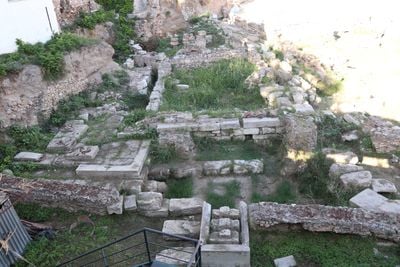
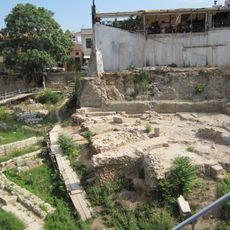
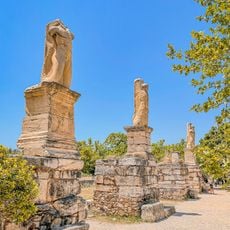
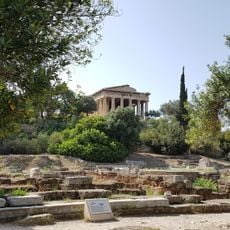
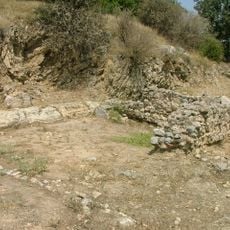
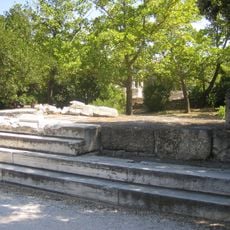
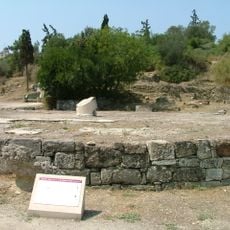
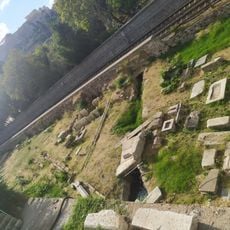
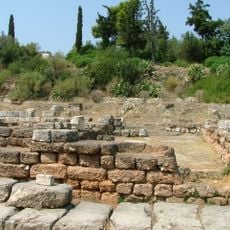
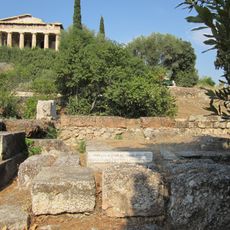
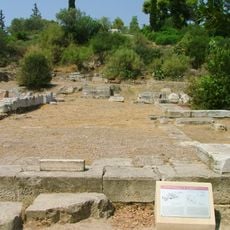
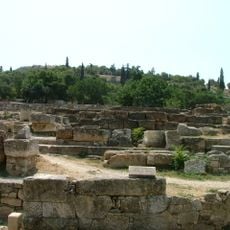
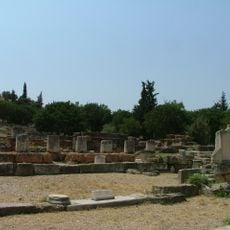
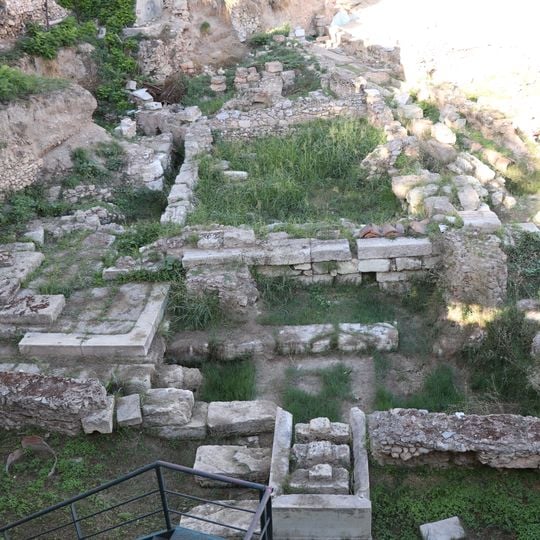
The Temple of Aphrodite Urania is a low ruin at the northwest corner of the Ancient Agora, where pale grey and white stone blocks form broken, stepped courses and small platforms set into a slope. On the left, a rectangular base of large flat slabs borders a patch of low green vegetation; toward the centre, a row of rectangular blocks sits above a short drop, with scattered loose stones and fragments around. Further up the slope, rougher rubble walls and smaller stone alignments continue, with grass and weeds growing between and over the stones throughout the remains.
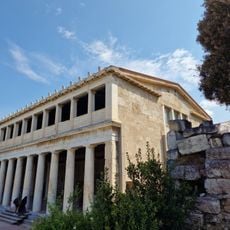
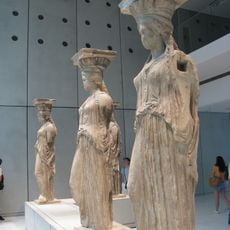
A marble altar was built here around 500 BC and was damaged, perhaps in the Persian sack of 480 BC, then repaired in the 420s BC. In the early 1st century AD an Ionic tetrastyle prostyle temple modelled on the north porch of the Erechtheion rose north of the altar. The sanctuary was out of use by the early 5th century AD, when a concrete platform and then a Late Roman stoa covered it; Byzantine housing followed in the 6th or 7th century. The site was identified in the 1980s.
The temple served as a place of worship for the celestial Aphrodite, where visitors brought doves as offerings to honor her divine role. These practices reflected how ancient Athenians connected with their goddess through ritual gesture.
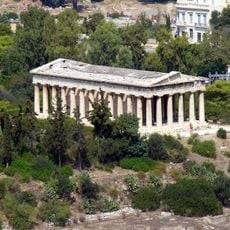
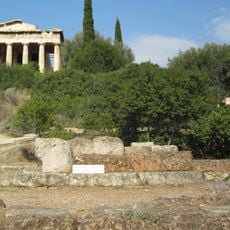
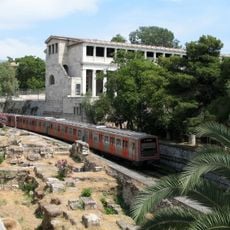
The site is accessible through the Ancient Agora entrance and sits near railway tracks and the Temple of Hephaestus. Visitors should wear sturdy shoes for uneven ground and prepare for sun exposure while exploring the remains.
Tens of thousands of bone fragments from ritual animal sacrifices were discovered at this location, providing insight into ancient worship practices. These archaeological findings reveal the scale and regularity of religious ceremonies performed at this sacred site.
The community of curious travelers
AroundUs brings together thousands of curated places, local tips, and hidden gems, enriched daily by 94,390 contributors worldwide.