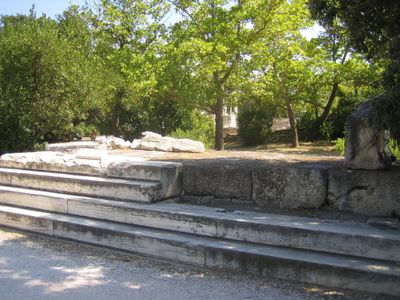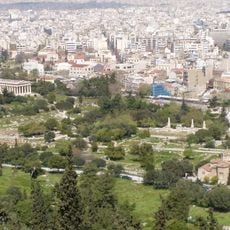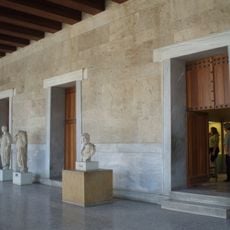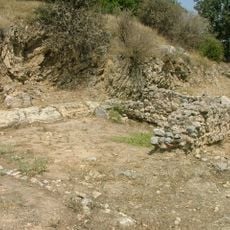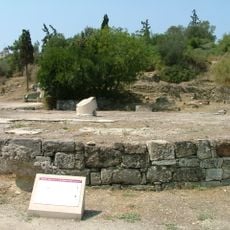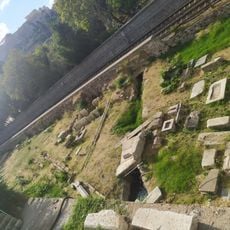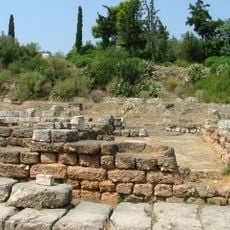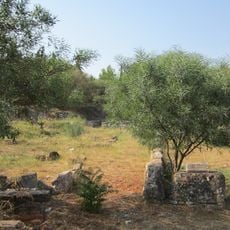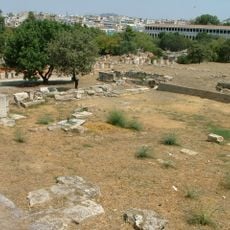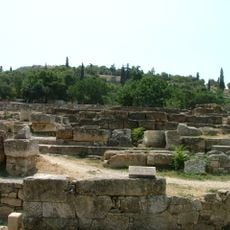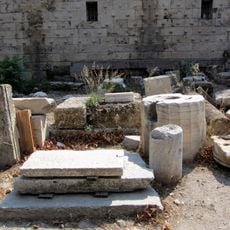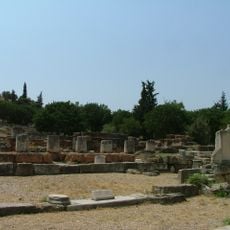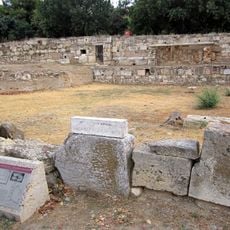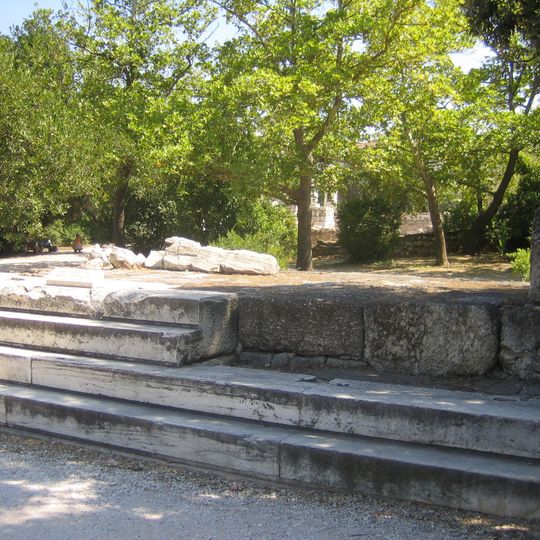
Altar of Zeus Agoraios, Religious monument in Ancient Agora, Greece.
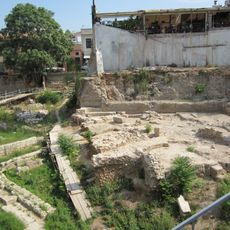
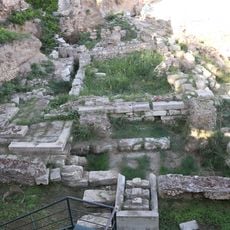
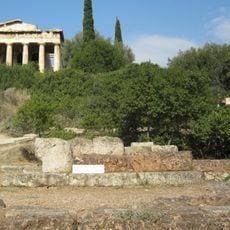
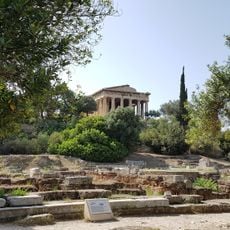
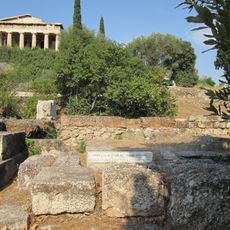
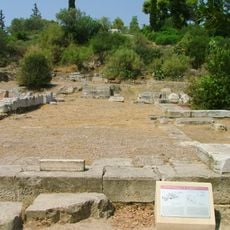
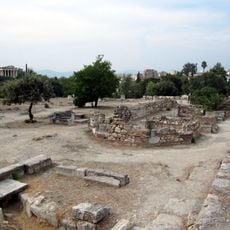
The Altar of Zeus Agoraios is a marble structure located in the northwestern section of the Ancient Agora measuring approximately 9 meters deep and 5.5 meters wide. The ruins display different construction phases with visible mason marks that reveal how ancient Greek builders worked with stone.
The altar was built in the 4th century BC and originally stood at the Pnyx, another significant location in Athens. During the Augustan period it was moved to the Agora, where excavations in 1931 revealed its remains.
The altar served as a place where Athenians honored the gods while also making important decisions together, showing how religion and daily life were closely connected. People gathered here to pray and discuss matters that affected their community.
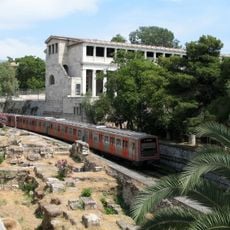
The altar sits within an archaeological site that is easy to reach on foot among other ancient ruins and remains. Visitors should protect themselves from sun and weather and wear comfortable shoes since the ground is uneven throughout the area.
The altar originally stood at the Pnyx, a place of political meetings, and was later moved to the Agora, showing how its role was reinterpreted. This relocation and reuse at a different religious and commercial center makes it a rare example of how ancient structures were adapted for new purposes.
The community of curious travelers
AroundUs brings together thousands of curated places, local tips, and hidden gems, enriched daily by 92,071 contributors worldwide.