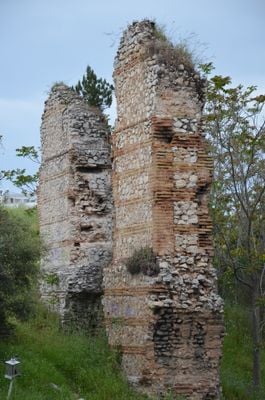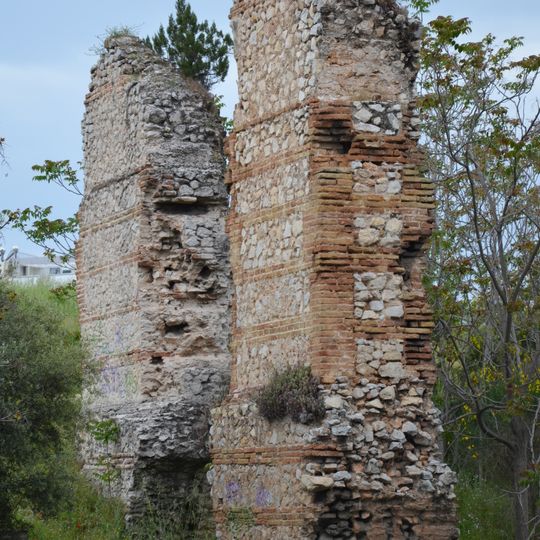
Aqueduct of Hadrian in Athens, Roman aqueduct in Attica Region, Greece
The Aqueduct of Hadrian is an underground water tunnel running from Mount Parnitha to Kolonaki, supplied by a network of wells that tap into the mountain springs. The passage slopes gradually to allow water to flow naturally without mechanical pumping.
Construction of this water supply began under Emperor Hadrian around 125 AD and took roughly 15 years to complete. The system served as the main water source for the city for many centuries afterward.
This aqueduct reflects how Roman engineers and local Greek builders worked together on a shared project. The structure shows a blend of both construction traditions visible in how it was built.
The passage is narrow and low, requiring visitors to bend down if exploring inside, so preparation for tight spaces is necessary. Visit during dry periods when possible, as some sections may have standing water and slippery surfaces.
The aqueduct still carries water today after nearly 2000 years, making it one of very few Roman systems that remain in active use. This uninterrupted function across so many centuries is what sets it apart from most ancient structures.
The community of curious travelers
AroundUs brings together thousands of curated places, local tips, and hidden gems, enriched daily by 91,394 contributors worldwide.