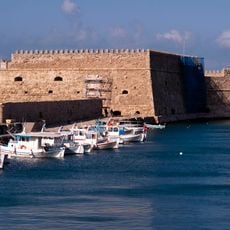
Venetian city walls, Medieval fortification system in Heraklion, Greece.
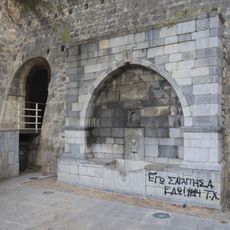
The Venetian city walls of Heraklion are a stone fortification that surrounds the old town with seven bastions connected by thick stone curtain walls. The layout forms a rough triangle, with four main gates and several smaller openings that once controlled all movement in and out of the city.
Construction began in 1462 under Venetian rule, with the design shaped by military engineers brought from Italy. The fortifications were expanded over the following centuries until the city fell to the Ottoman Empire in 1669 after one of the longest sieges in European history.
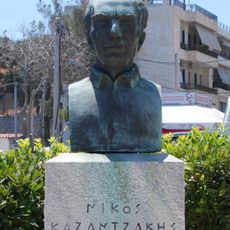
The walls host the grave of Nikos Kazantzakis (1883–1957) on Martinengo Bastion, a plain stone tomb with a wooden cross and the epitaph he requested: "I hope for nothing. I fear nothing. I am free." The ditch by Jesus Bastion holds the open-air Oasis theatre, seating about 1,200, and the Manos Hatzidakis garden theatre.
The walls can be accessed from several points around the old town perimeter, and some sections allow walking along the top for an open view of the city and the sea. Sturdy footwear is a good idea since the surfaces can be uneven, and some areas are steeper than they first appear.
The grave of writer Nikos Kazantzakis (1883–1957) stands on Martinengo Bastion, the largest of the seven land-front bastions and the southern apex of the triangular enceinte. The plain stone tomb carries a wooden cross and the epitaph he asked for: "I hope for nothing. I fear nothing. I am free."
The community of curious travelers
AroundUs brings together thousands of curated places, local tips, and hidden gems, enriched daily by 92,954 contributors worldwide.