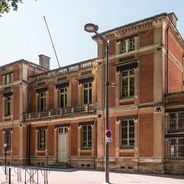
Musée Saint-Raymond, Archaeological museum in Toulouse, France
The Musée Saint-Raymond is an archaeological museum housed in a 16th-century former university building and contains extensive collections of Roman sculptures, mosaics, and artifacts from the Toulouse region. The exhibits span multiple floors and include Celtic and early Christian finds that document the cultural history of the area.
The museum opened in 1892 in a building that previously served as a university college and ancient burial site, becoming an important center for archaeological research. Its collections grew through excavations in the surrounding area, which fundamentally changed understanding of ancient settlement patterns in the region.
The museum's name comes from Raymond Gayrard, who founded a hospital for the poor and pilgrims on this site around 1075–1080; after his death around 1120 he was buried in the adjoining Saint-Jean chapel, renamed Saint-Raymond in 1122. The building later became the Collège Saint-Raymond, reserved for poor students of the University of Toulouse until the French Revolution. Today the collection covers protohistory to the early Middle Ages, with Celtic, Roman and early Christian finds mainly from the Toulouse region.
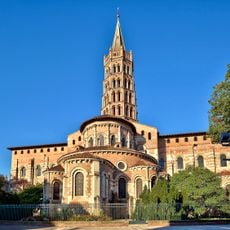
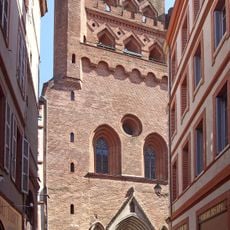
The museum is located near Place Saint-Sernin in the city center and is easily reached on foot. The rooms are well-lit and the exhibits across multiple floors are logically organized, making it straightforward to explore at your own pace.
The 4th-century Christian necropolis lay beside the Roman road near Saint-Sernin, around the tomb of Saturnin, Toulouse's first bishop. Excavations in 1994–1996 uncovered about a hundred sepulchres, several inscriptions and a lime kiln from the 5th or 6th century, now displayed in the museum.
The community of curious travelers
AroundUs brings together thousands of curated places, local tips, and hidden gems, enriched daily by 93,051 contributors worldwide.