Grand Crêt d'Eau, Mountain summit in the French Jura, Ain, France
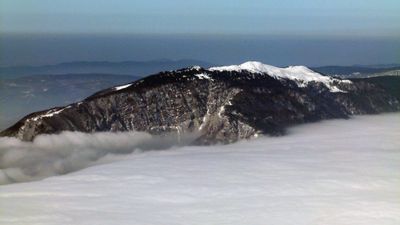
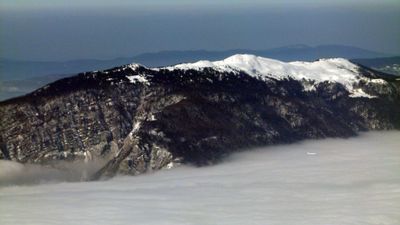
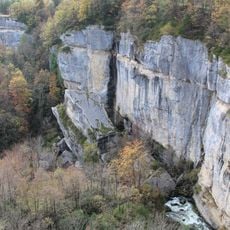
Grand Crêt d'Eau is a ridge in the French Jura whose highest point, the Crêt de la Goutte, reaches 1,621 metres. It is the southern end of the Monts Jura anticline, with dark rock faces cut by gullies and snow-filled crevices below a snow-capped top. The ridge lies across the communes of Valserhône, Confort, Farges, Collonges and Léaz.
The region has been shaped by grazing since centuries, when early inhabitants cleared forests to create pasture lands. This livestock farming molded the landscape and led to the establishment of mountain operations like the Varambon dairy in the early 1800s.
The name derives from "Crêt d'Au", where "crêt" is a typical Jura term for a ridge and the specific comes from a Franco-Provençal word for a meadow or alpine pasture. Misunderstanding and over-Frenchification turned it into Credo, then Crêt d'Eau, probably by laicisation.
The main routes start from Lancrans and require good fitness for a full day outing. Visitors should bring sturdy boots, plenty of water, and protective clothing, as conditions vary with the season.
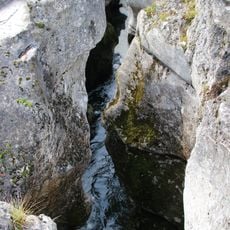
Natural water holes locally called goyas form through limestone erosion and serve livestock as vital water sources during summer months. These geological features are rare and make the area of interest for nature observers.
The community of curious travelers
AroundUs brings together thousands of curated places, local tips, and hidden gems, enriched daily by 94,658 contributors worldwide.