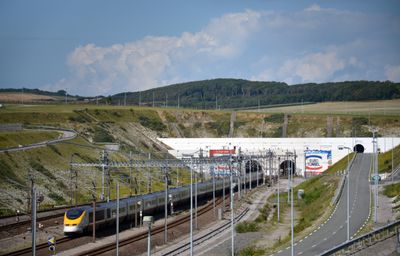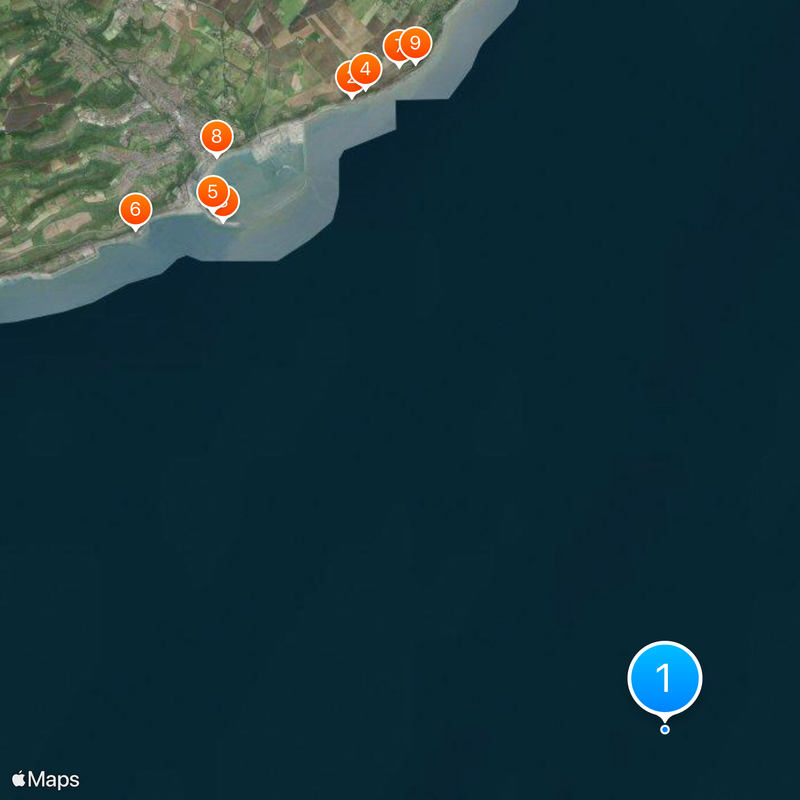
Channel Tunnel, Railway tunnel in Kent, England
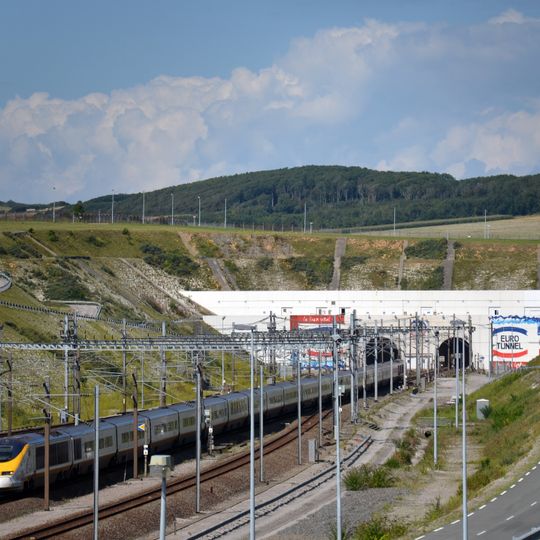
The Channel Tunnel is a railway tunnel beneath the English Channel connecting England and France, made up of three parallel tubes: two for passenger and freight traffic, plus one service tube between them. The two main tubes run roughly thirty meters apart, averaging forty meters below the seabed.
The idea for a fixed crossing beneath the Channel appeared as early as the beginning of the 19th century, but construction only started in 1988 after decades of debate. Completion came in 1993, and commercial operations began the following year.
The tunnel allows travelers to cross between the United Kingdom and mainland Europe without leaving their train seat or switching to ferries. This fixed land link has changed the way millions of people commute and travel between London, Paris, Brussels, and other cities.
Trains travel through the tubes at about 160 kilometers per hour (100 miles per hour), making the crossing between coasts last around 35 minutes. Passengers experience the journey as a calm, somewhat dark glide with no particular views or events.
The underwater section stretches for nearly 38 kilometers (about 24 miles), making it the longest undersea railway tunnel in the world. It also runs through a chalk layer stable enough to support the structure without heavy reinforcement.
The community of curious travelers
AroundUs brings together thousands of curated places, local tips, and hidden gems, enriched daily by 92,611 contributors worldwide.