Oppidum d'Ensérune, Archaeological site and historic monument in Nissan-lez-Enserune, France.
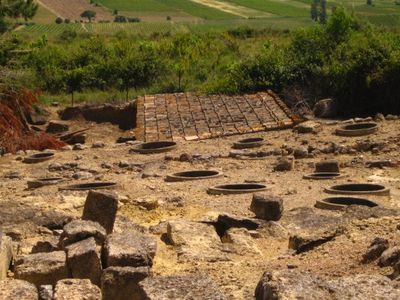
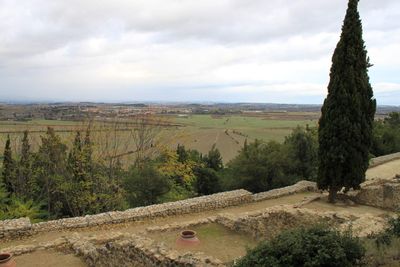
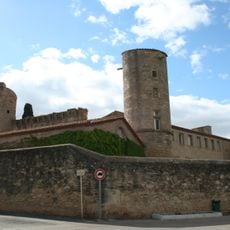
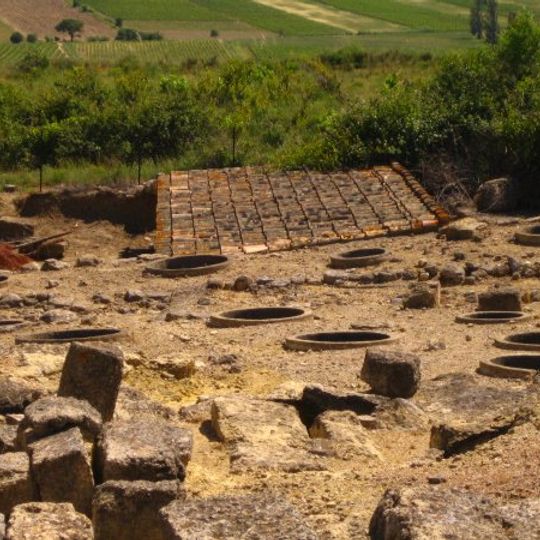
The Oppidum d'Ensérune is a fortified settlement on a hilltop between Béziers and Narbonne that was inhabited from the 6th to the 1st century BC. The site displays remains of defensive walls, storage chambers carved into rock, and a museum collection containing pottery, coins, and tools from different periods.
The settlement emerged in the 6th century BC and remained continuously inhabited for over 500 years into the Roman period. During this long span, the inhabitants changed several times, which is reflected in the artifacts and building techniques discovered.
The pottery found here comes from different Mediterranean regions and shows how this place brought together Greeks, Iberians, and other peoples. Visitors today can see how residents used goods traded from across the Mediterranean world.
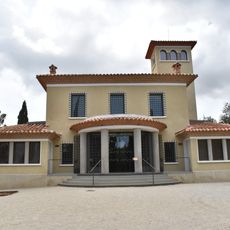
The hilltop can be explored on foot, with paths leading to the excavated areas and the museum building. The best time to visit is in spring or autumn when temperatures are comfortable and crowds are smaller.
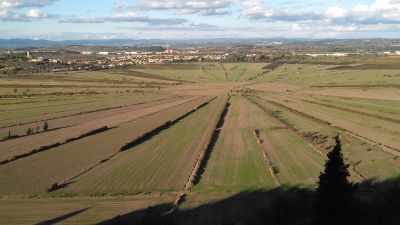
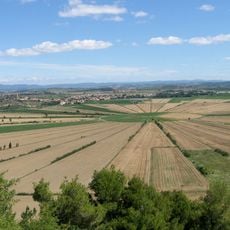
From above, you can see an unusual pattern of wedge-shaped fields separated by irrigation ditches that taper toward the center. This geometric system was created in the 13th century through drainage projects and remains clearly visible from the air today.
The community of curious travelers
AroundUs brings together thousands of curated places, local tips, and hidden gems, enriched daily by 92,616 contributors worldwide.