Citadel of Lille, Military fortress in Lille, France
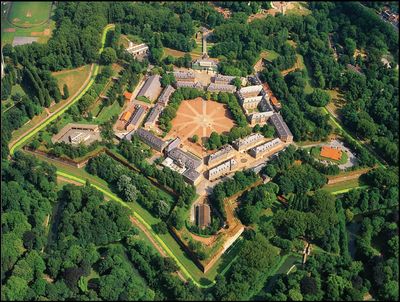
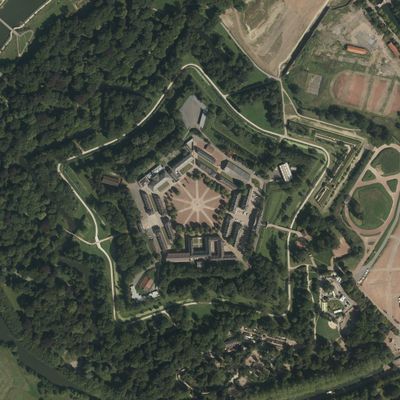
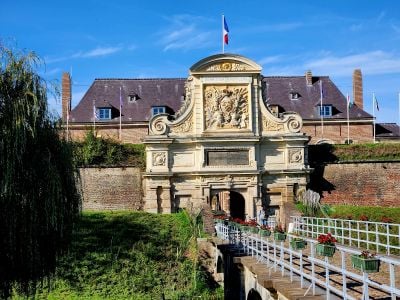
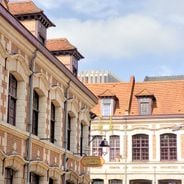
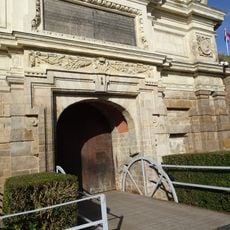
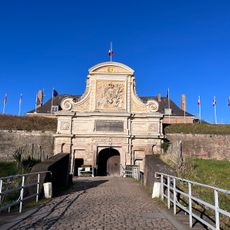
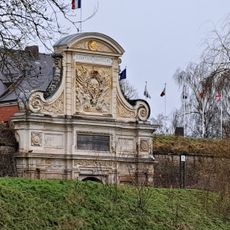
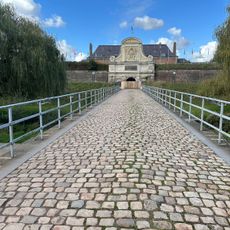
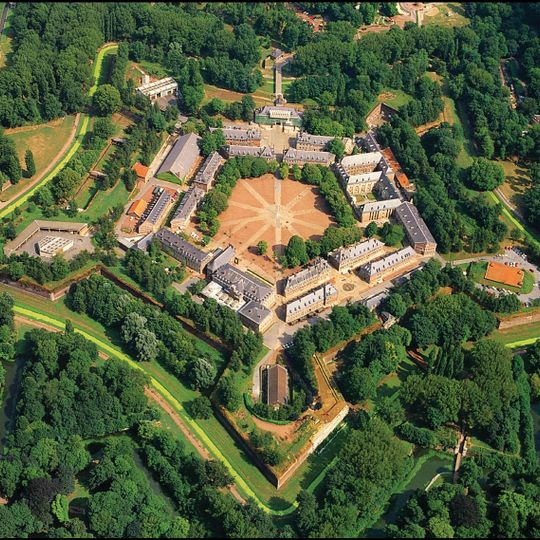
The Citadel of Lille is a pentagonal fortress built of pale stone and reddish brick, with five royal bastions at the angles and curtain walls of 49 metres. A gate with a drawbridge and a tall slender tower stand on one side. Inside, barracks and storerooms with steep dark roofs line a large square of reddish gravel, from which paths radiate outward.
Construction of the fortress took place from 1667 to 1670 following the acquisition of Lille by France. Architect Vauban designed it according to the latest defensive principles of that era.
Vauban called the Citadel of Lille the "Queen of Citadels", and it became the model for most citadels he later designed. Its five corner bastions carry the names Anjou, La Reine, Turenne, Le Dauphin and Le Roi, linking the structure to the French crown and its commanders. The site still houses the headquarters of the Rapid Reaction Corps-France, a multinational NATO-standard army staff.
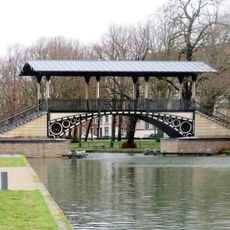
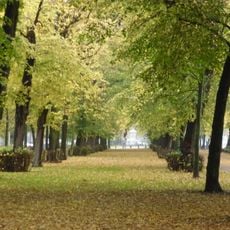
The citadel lies west of the old town, reached on foot from the Bois de la Deûle and the Champ de Mars esplanade. It still houses the headquarters of the Rapid Reaction Corps-France, a NATO structure, so the interior is not freely open; guided visits are arranged through the Lille tourist office. The surrounding moats, ramparts and wooded paths can be walked without entering the military compound.
Vauban called the Citadel of Lille the "Queen of Citadels", and it served as the model for most citadels he later designed. Its five corner bastions carry the names Anjou, La Reine, Turenne, Le Dauphin and Le Roi, framing curtain walls 49 metres long. The site was never inscribed on the UNESCO network of major Vauban sites, partly because the French Army still occupies it.
The community of curious travelers
AroundUs brings together thousands of curated places, local tips, and hidden gems, enriched daily by 93,424 contributors worldwide.