Abbey of Saint-Étienne, Caen, Benedictine monastery in Caen, France
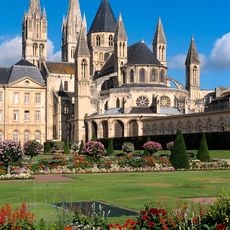
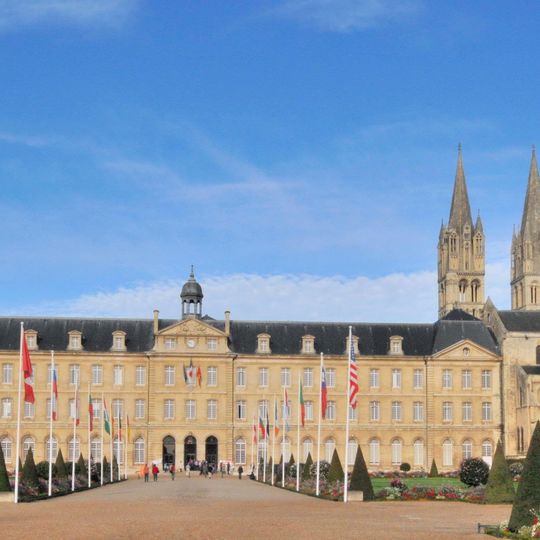
The Abbey of Saint-Étienne, or Abbaye aux Hommes, is a former Benedictine monastery in Caen built of pale Caen limestone. Its west façade has a central section topped by a small cupola, with two tall tapering stone spires rising to the right above the roofline. The entrance is framed by three dark arched doorways beneath a round clock face, and a gravel courtyard with flagpoles lies in front.
The monastery was founded in 1063 by William the Conqueror and his wife Matilda as a demonstration of Norman power during the medieval period. Over centuries, it became an important center of religious and intellectual life in the region.
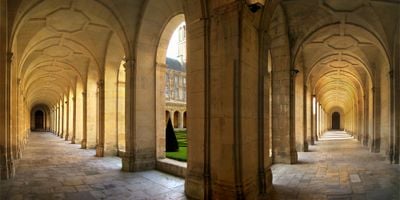
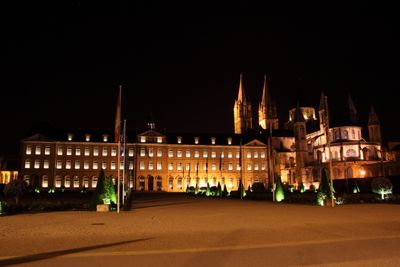
The name Abbaye aux Hommes distinguishes the monks' foundation from the Abbaye aux Dames, the nuns' abbey founded east of Caen. William the Conqueror was buried here in 1087; his tomb was opened in 1522, destroyed by Huguenots in 1562, and replaced by the white marble ledger stone seen today. Since the 1960s the conventual buildings have housed Caen's town hall.
The former abbey church is open to visitors, while the conventual buildings have housed Caen's city hall since the 1960s and are not open for tours. Enter the church through the west facade facing the gravel courtyard lined with flagpoles. The church is classified as a monument historique.
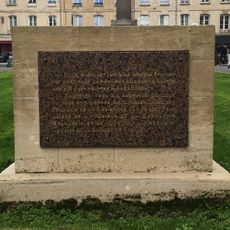
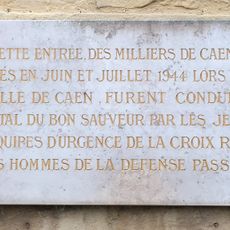
During World War II, residents of Caen sheltered inside the church and marked its roof with a red cross so pilots could recognize it from above. This wartime mark of protection tells a powerful story of how the building served the community in their darkest hour.
The community of curious travelers
AroundUs brings together thousands of curated places, local tips, and hidden gems, enriched daily by 94,050 contributors worldwide.