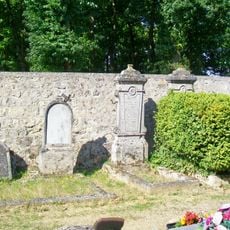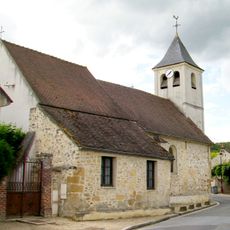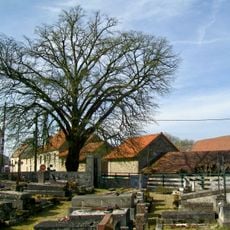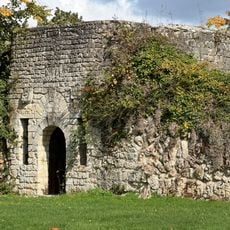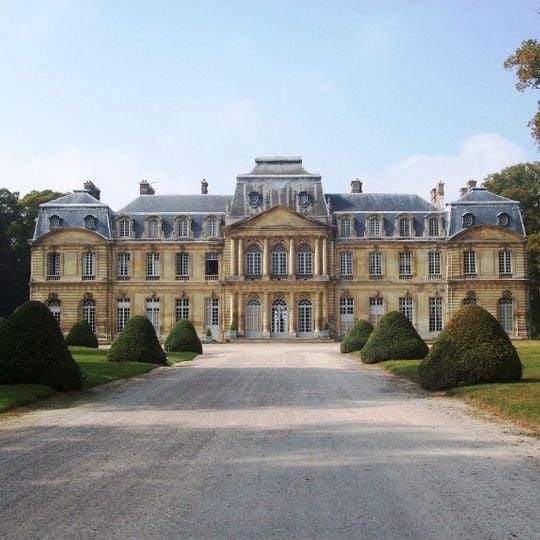
Champlâtreux, 18th century castle in Épinay-Champlâtreux, France.
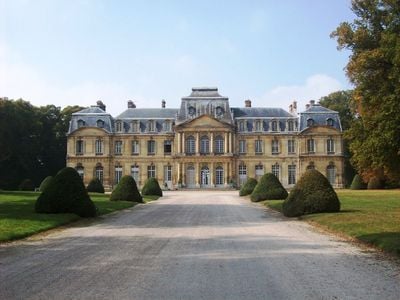
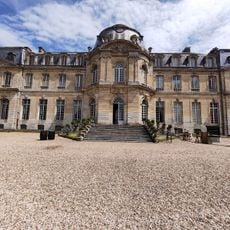
Champlâtreux is a French classical château built between 1751 and 1757 by architect Jean-Michel Chevotet for Mathieu-François Molé. Its long symmetrical stone facade has a central pavilion with a rounded dome roof and four clock faces, flanked by wings with tall white-framed windows and dormers. The ground floor has arched openings, and a gravel courtyard with clipped hedges and pyramidal shrubs lies in front.
The castle was transformed from an older residence into its present form during the mid-1700s under direction of a wealthy administrator. During the French Revolution it served as a military hospital, an experience that displaced much of its original furnishings.
The name Champlâtreux does not come from gypsum: the land was bought in 1567 by Édouard Molé, and the family was later called "Molé de Champlâtreux" after it was raised to a marquisate. The château was a country house for receptions and hunting, with twenty-three guest rooms, each with its own dressing room, wardrobe and servant's room. The Goncourt brothers described the salon in 1862 as restored for a visit by King Louis-Philippe, in a "sad style" of parliamentary regimes.
The park and interior open only in July and August and during the European Heritage Days; check those windows before travelling. Access is from the D 316, where the two guard pavilions stand, and a bridge crosses the dry moat into the grounds. The stables lie to the left of the forecourt.
The castle was financed by a wealthy administrator using his wife's fortune, an unusual arrangement for that era. This partnership made it possible to turn a modest property into one of the region's more notable estates.
The community of curious travelers
AroundUs brings together thousands of curated places, local tips, and hidden gems, enriched daily by 93,381 contributors worldwide.