Château de la Roche, Neoclassical château in Annesse-et-Beaulieu, France
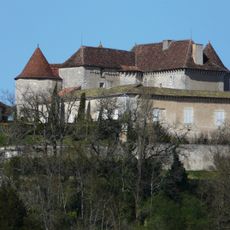
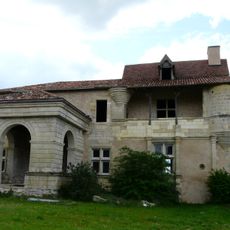
Château de la Roche stands northeast of Annesse-et-Beaulieu between the D3 road and the Isle. Its north-south main block is flanked on the west by two round towers with dark conical roofs, which anchor two perpendicular wings. The pale grey facade has a steep hipped roof with three dormer windows, an arched entrance, and a stone balcony.
The present château replaced an older noble seat first mentioned in the 16th century; Count Grigory Kushelev-Bezborodko had it built in the 19th century in Neoclassical style for his wife Luboff. In World War I it served as a military hospital. From 1943 it housed a hospice for elderly Jewish refugees, then became a Pasteur Institute annex producing typhus vaccine and, from 1950, flu vaccine until production moved to Louviers in 1975.
The château stands on the site of an older noble repaire recorded in the 16th century, and Count Grigory Kushelev-Bezborodko had the present building erected in the 19th century for his wife Luboff. From 1943 it housed a Pasteur Institute annex producing typhus vaccine, then influenza vaccine from 1950 until the laboratory moved to Louviers in 1975.
The château stands in the centre of the Dordogne, north-east of Annesse-et-Beaulieu, between the D3 road and the Isle river. It is a private property, so visitors see it from the outside only; the pale facade, round towers and conical roofs are best viewed from the public road.
A U.S. soldier treated at the château's World War I military hospital later built a folly in Loveland, Ohio, and named it Château Laroche after this building. From 1943 the château housed a Pasteur Institute annex that made typhus vaccine, then influenza vaccine from 1950; production moved to Louviers in 1975.
The community of curious travelers
AroundUs brings together thousands of curated places, local tips, and hidden gems, enriched daily by 94,368 contributors worldwide.