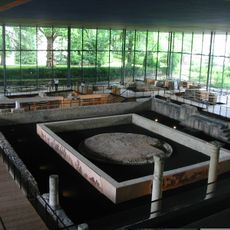
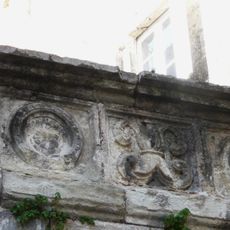
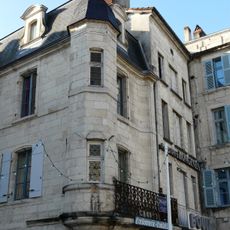
Citadelle gallo-romaine de Vésone, Roman fortification in Périgueux, France.
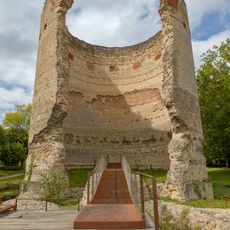
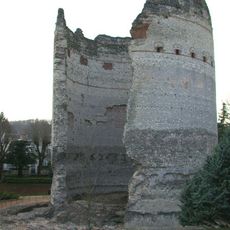
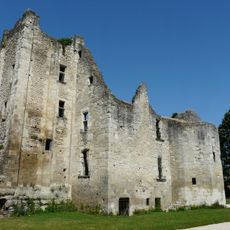
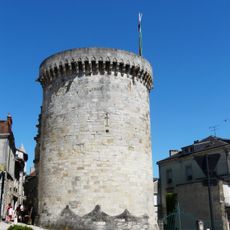
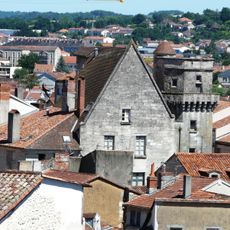
The Citadelle gallo-romaine de Vésone is the late-3rd-century wall circuit of Vesunna, built around 284 CE, whose 950-metre enceinte had 24 towers about 8 m in diameter, 23 curtain walls and three gates, standing 9 m high and 5 to 6 m thick. Its north-western half incorporated the amphitheatre of Vesunna, and the walls were raised from reused stones of the city's monuments. Surviving sections stand in central Périgueux, among them the Mars Gate, of which about 9 m remains, 4 m of it underground.
The fortification arose around 284 CE after the Roman city of Vesunna faced destruction during raids, prompting the construction of a new, heavily defended settlement. The builders reused materials from the earlier city and employed military design innovations of the late Roman period.
The Porte de Mars, the best-preserved of the three gates, was built between the late 3rd and early 4th century. It has two semi-circular towers with pilasters topped by a large entablature in an adapted Tuscan style, as described by archaeologist Hervé Gaillard. It was rediscovered in 1858 by Arcisse de Caumont and now stands in a private garden in the Cité district.
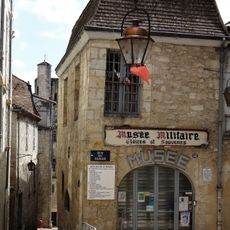
The remains sit scattered across multiple streets in central Périgueux, mainly along Rue de Turenne and Rue Romaine, where visitors can spot the old structures while walking. It makes sense to allow time for a leisurely route to explore the different gates and wall sections throughout the city.
The Mars Gate was rediscovered in 1858 by the archaeologist Arcisse de Caumont; it stands in a private garden in the Cité quarter, and the city bought the property in September 2024. About 9 m of the gate survives, 4 m of it below ground.
The community of curious travelers
AroundUs brings together thousands of curated places, local tips, and hidden gems, enriched daily by 93,141 contributors worldwide.