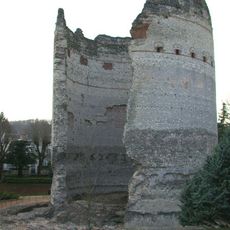
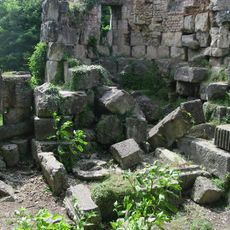
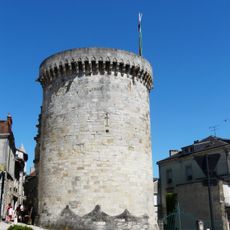
Tour de Vésone, Roman tower in Périgueux, France.
Tour de Vésone is a cylindrical tower that formed the core of an ancient temple with thick stone walls built to endure centuries. The structure displays the construction methods typical of Roman architecture, featuring a solid core and carefully positioned stonework.
The tower is the surviving cella of a Gallo-Roman fanum built in the 2nd century, perhaps at the end of the 1st, to the tutelary goddess Vesunna. In 1846 it was classified as a monument historique. The Périgueux–Brive railway line, opened in 1860, and nearby street works destroyed the remains of the wide enclosure that had surrounded the temple.
The tower was the cella of a temple dedicated to Tutela Vesunna, the tutelary deity of the Petrocorii, as inscriptions in the Museum of Art and Archaeology of Périgord show. The Count of Taillefer wrongly thought it was dedicated to Isis. A bas-relief found southwest of Château Barrière shows a seated panther with the inscription TVT///// A/////.
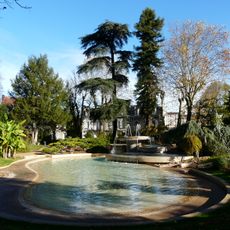
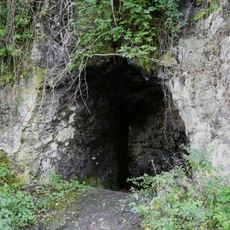
The tower stands in the Jardin de Vésone, a public garden 50 metres west of the Vesunna museum, on the edge of the Périgueux–Brive railway line. The garden was laid out as an archaeological square after the city bought it in 1894. The breach nearly nine metres wide opens on the east side, so walk round to see the surviving curve of the wall.
The tower reaches about 24 meters tall and preserves features from several different building phases made over its long period of use. These layers of repairs and modifications tell the story of how Roman inhabitants maintained the structure through generations.
The community of curious travelers
AroundUs brings together thousands of curated places, local tips, and hidden gems, enriched daily by 92,951 contributors worldwide.