Pont de la Concorde, Stone arch bridge near Place de la Concorde, France
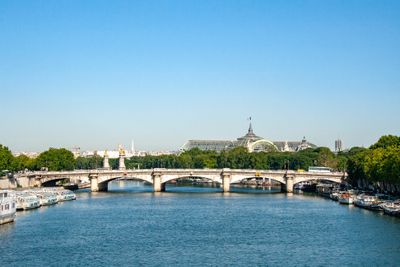
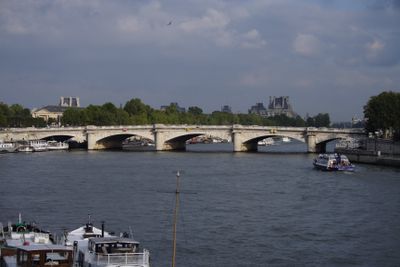
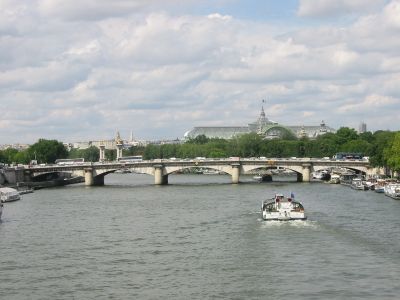
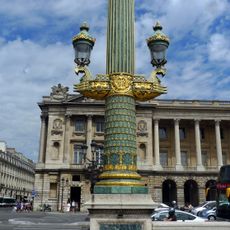
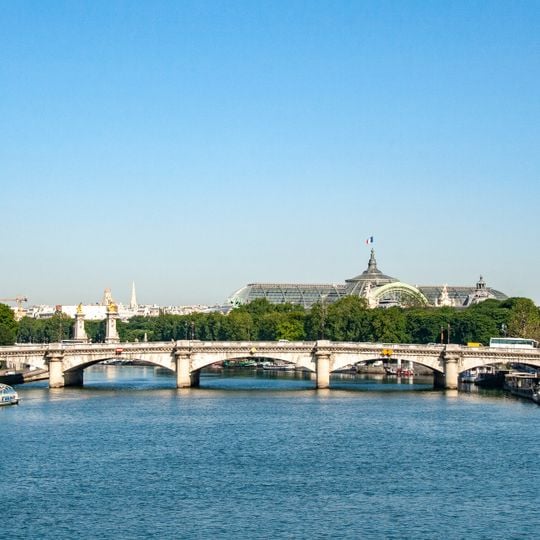
The Pont de la Concorde is a low stone arch bridge over the Seine between the Quai des Tuileries and the Quai d'Orsay, linking the 7th and 8th arrondissements. Its flat deck rests on five shallow arches carried by four thick rectangular piers, with a plain parapet topped by small rounded projections above each pier. A stone column on the left bank carries a gilded statue. The bridge was widened to 35 m between 1930 and 1932, with a 21 m roadway and two 7 m pavements.
Construction began in 1787 and finished in 1791, during the French Revolution period, with materials including stones salvaged from the demolished Bastille. The structure was substantially widened decades later to accommodate the city's growing traffic needs.
The bridge's name comes from the Place de la Concorde, which took its name from the revolutionary ideal of reconciliation. In 1810 Napoleon placed statues of ten generals on the bridge; after the fall of the Empire only four were finished and they were stored at the Invalides. The twelve marble statues installed under Louis XVIII were moved to Versailles by Louis-Philippe because they were too heavy for the bridge. Joe Dassin mentions the bridge in his song Les Champs-Élysées.
The bridge links the Quai des Tuileries by the Place de la Concorde with the Quai d'Orsay. Metro stations Concorde (lines 1, 8, 12) and Assemblée nationale (line 12) are nearby. The deck is 35 m wide, with a 21 m roadway and two 7 m pavements, so pedestrians keep to the sides while traffic crosses.
Stones from the demolished Bastille were incorporated into the bridge's foundations, literally embedding the symbol of the revolution into the new structure. This fusion of destruction and renewal makes the crossing itself a physical reminder of that tumultuous era.
The community of curious travelers
AroundUs brings together thousands of curated places, local tips, and hidden gems, enriched daily by 94,226 contributors worldwide.