Ancient Roman circus of Vienne, Roman archaeological site in Vienne, France
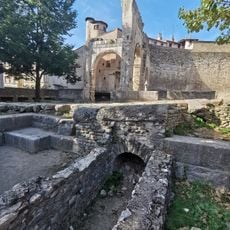
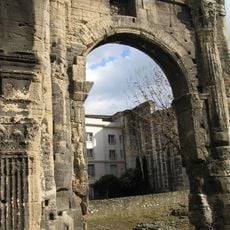
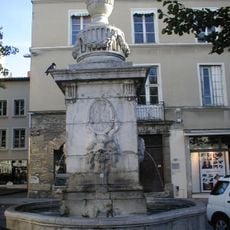
The Ancient Roman circus of Vienne is an archaeological site whose outline lies beneath streets and housing south of the old city, near the Rhone. Of the 460-metre circus, only the so-called Pyramid remains standing: a masonry obelisk about 23 metres high on a square quadrifrons base 7.45 metres tall, with arched passages and a projecting cornice. It stands on Boulevard Fernand-Point.
A first circus was built at the end of the 1st century on the southern edge of Vienne, on ground raised over market gardens and light buildings. In the second quarter of the 2nd century it was rebuilt larger in stone, extending north, and excavations from 1853 revealed a structure 460 metres long. Modifications may date to the 4th century, when the surrounding docks and housing were abandoned but the circus may have remained in use.
The monument's local names carry its legends: it was long called "l'aiguille" (the needle) by the people of Vienne, and is still known as the "Tombe de Pilate", after a tradition that Pontius Pilate killed himself in the Rhône at Vienne. The medieval imagination also made it the tomb of the city's legendary founder Venerius, or of the emperors Augustus, Claudius and Severus Alexander. It now stands on Place Fernand-Point, named for the chef whose restaurant La Pyramide adjoined it.
The site sits near the river on Boulevard Fernand Point and can be visited year-round, either independently or with a knowledgeable guide. It is wise to wear sturdy shoes since the ground is uneven and some areas are rough to walk across.
A pyramid structure standing at the center carries an intriguing local legend linking it to Pontius Pilate and his supposed exile in the city. Though historically contested, this story kept the monument alive in local memory across the centuries.
The community of curious travelers
AroundUs brings together thousands of curated places, local tips, and hidden gems, enriched daily by 94,604 contributors worldwide.