Canal Saint-Denis, Canal network in Seine-Saint-Denis, France
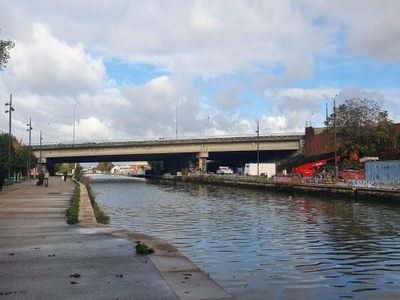
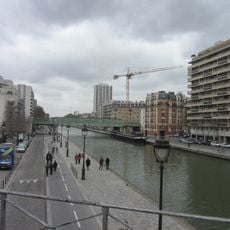
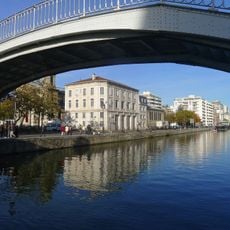
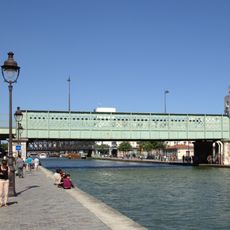
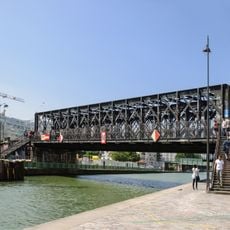
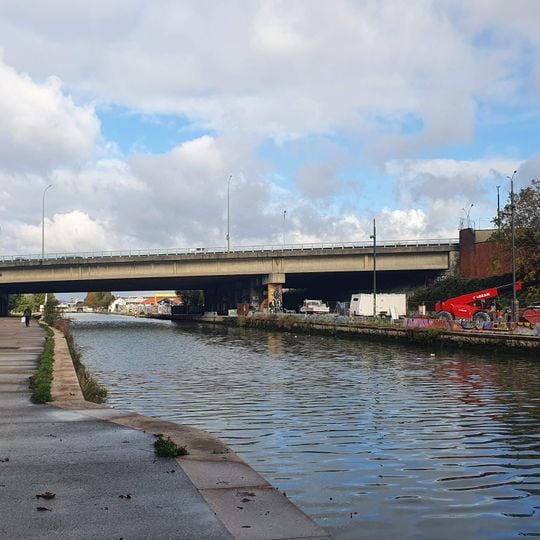
Canal Saint-Denis is an artificial waterway about 6.6 kilometers long that connects the Canal de l'Ourcq to the Seine River. It passes through Saint-Denis and Aubervilliers, where small pleasure boats and occasional cargo vessels travel its length today.
Napoleon Bonaparte's decree of 19 May 1802 ordered a canal from the Seine below the Bassin de l'Arsenal to the Bassin de la Villette and on through Saint-Denis, so barges could bypass central Paris and a Seine meander. Work began in 1805 under Édouard de Villiers du Terrage and the canal opened in 1821 with twelve locks covering a 28.34 m drop. Rebuilt and widened between 1890 and 1895, it was reduced to seven locks, the Écluse du Pont de Flandre alone lifting 10 m.
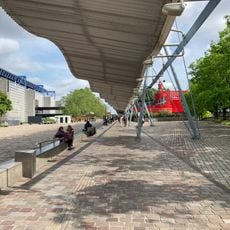
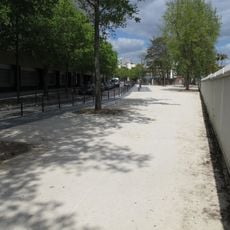
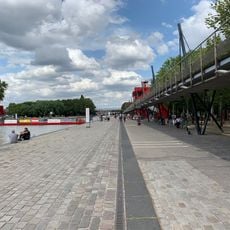
The canal's name comes from Saint-Denis, the town where it rejoins the Seine. Its banks carry a towpath, the chemin de halage, once used by horses hauling barges and still kept in working order. Near the Stade de France, the bassin de la Maltournée is a landing zone for construction materials carried by barge.
A towpath runs the full 6.6 km from the Bassin de la Villette to the Seine at Saint-Denis, kept in condition for canal operations and used by walkers, cyclists and rollerbladers. A slipway for small craft is at the Pont de Stains in Aubervilliers. The canal is open to navigation all year; boats must stay under 8 m beam, 4.44 m air draft and 2.6 m draft.
The canal carries most of the 80,000 to 100,000 tonnes moved each year on the Parisian canal network, and its depth of 3.2 to 3.5 metres lets through barges of up to 1,000 tonnes. Vessels may use it only if their beam is under 8 metres, their air draft under 4.44 metres and their draft under 2.6 metres. A slipway for launching boats is laid out at the Pont de Stains in Aubervilliers.
The community of curious travelers
AroundUs brings together thousands of curated places, local tips, and hidden gems, enriched daily by 94,443 contributors worldwide.