Fortifications of Metz, Military fortification system in Metz, France.
The Fortifications of Metz consist of two rings of forts around the city. The inner belt, about 4 km from the centre, was begun by the French in 1867 and includes Fort de Queuleu, Fort de Plappeville and Fort Diou. The outer belt, 8–10 km out, was built by the Germans from 1899 with forts such as Fort Driant and Fort Jeanne d'Arc. Barracks had 3 m concrete roofs under up to 6 m of earth, linked by tunnels.
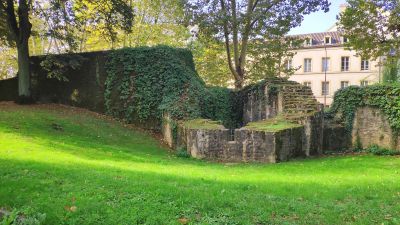
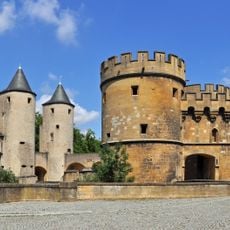
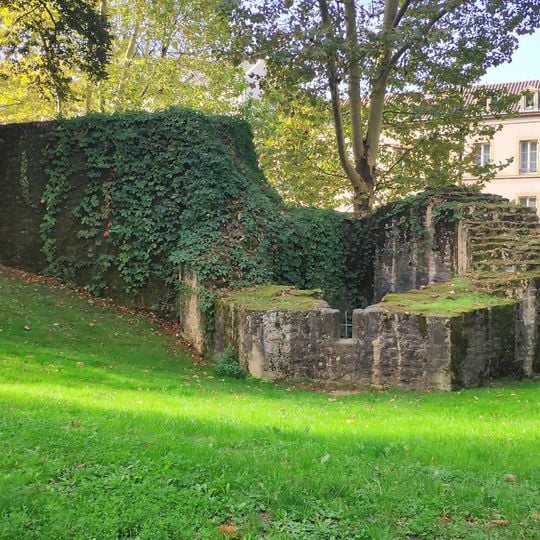
Metz was fortified from Roman times, with a first masonry wall around 300 AD and the German Gate built in 1445 as one of seven castle gates. Vauban began a new fortification in 1674, completed by Louis de Cormontaigne between 1728 and 1749. After the 1871 Treaty of Frankfurt, the German Empire finished the first fort belt and added a second ring of Feste from 1899, making Metz the strongest fortress city in the German Reich.
The forts carry two sets of names: French originals such as Fort de Queuleu and Fort de Plappeville, and German renamings from 1873 like Fort Goeben and Fort Alvensleben. The small 1912–1916 works between Driant and Jeanne d'Arc were nicknamed the "seven dwarfs" by U.S. Third Army soldiers in 1944, a name alluding to their weak defensive strength.
The two belts lie about 4 km and 8–10 km from the city centre, so a car or bicycle is needed to link forts such as Plappeville, Queuleu and Driant. Many works stand on wooded ground with uneven tracks; some, like the Groupe fortifié du Mont Saint-Quentin, are signposted walking routes. Access to interiors varies by fort, so check locally before setting out.
The fortifications feature rotating steel turrets and thick concrete casemates designed to withstand heavy artillery fire. Many of these technical features remain hidden underground and are only visible to visitors in certain accessible sections.
The community of curious travelers
AroundUs brings together thousands of curated places, local tips, and hidden gems, enriched daily by 94,460 contributors worldwide.