Moulin de la Galette, Historic windmill in Montmartre, Paris, France
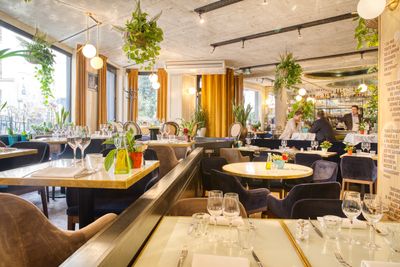
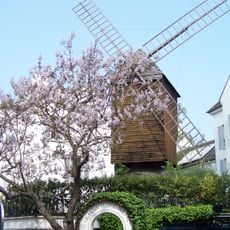
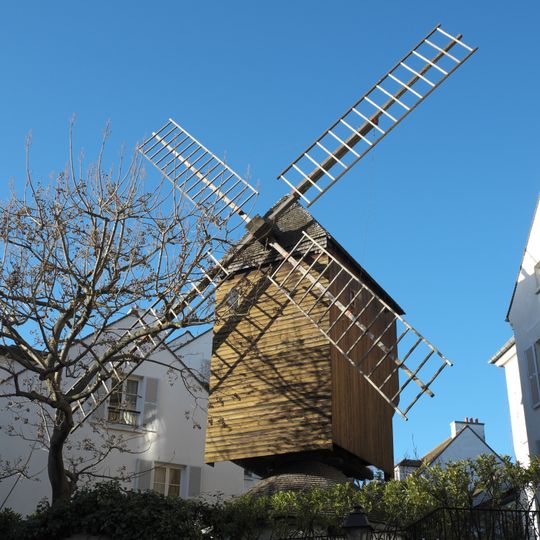
Moulin de la Galette is a windmill on a low masonry base, its square body of weathered horizontal timber boards narrowing to a capsided roof with a small dark housing. Four long lattice sails of unpainted wooden battens radiate from the top. The Blute-fin mill is now private and not open to the public; the Radet mill marks the entrance to a bistro.
The Moulin de la Galette comprises two windmills, Blute-fin and Radet, on Montmartre. Blute-fin was built in 1622, while Radet was moved and rebuilt in 1717. The Debray family acquired Blute-fin in 1809 and Radet in 1812. In 1814, during the siege of Paris, three Debray men died defending the mill against Cossacks; the miller was killed and nailed to the sails. In 1870, Pierre-Charles Debray suffered the same fate during the Franco-Prussian War.
The windmill became known through Renoir's paintings, which captured the social gatherings and festivities held here. Visitors can still see how important this place was to artists and the nightlife of Montmartre.
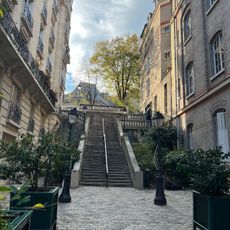
The site sits on a hilltop in Montmartre and is easily reached on foot or by local transit. Visitors should note that the area has many stairs and sloped streets that may affect your visit.
The mill's name comes from the small rye bread, or galette, that the Debray millers sold with a glass of milk, probably donkey's milk, to visitors. In 1830 they replaced the milk with wine, especially local Montmartre wine, and the mill became a cabaret.
The community of curious travelers
AroundUs brings together thousands of curated places, local tips, and hidden gems, enriched daily by 94,076 contributors worldwide.