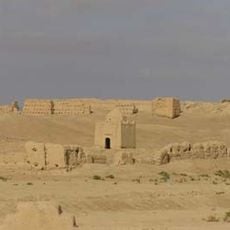
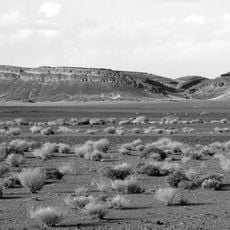
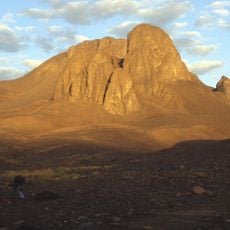
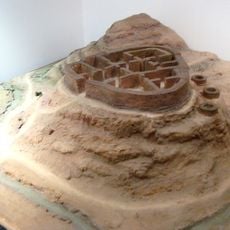
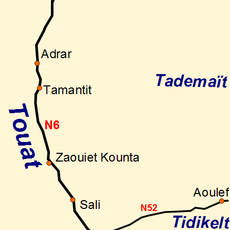
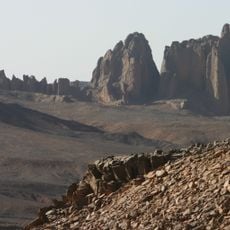
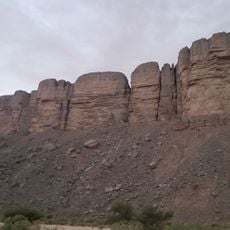
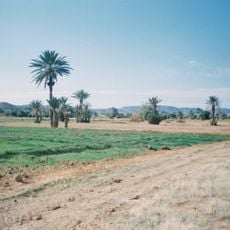
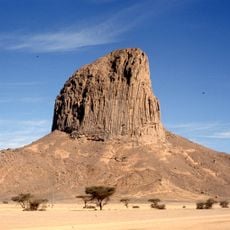
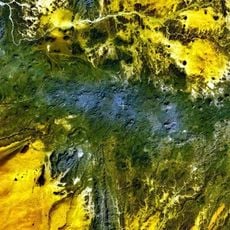
Gerboise bleue, Nuclear test site in Tanezrouft, Algeria.
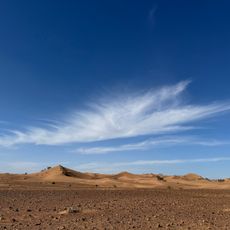
Gerboise Bleue was a French nuclear weapons test conducted in 1960 in the Tanezrouft Desert in Algeria, producing an explosion of approximately 70 kilotons. The detonation occurred from a steel tower about 100 meters tall that stood amid the Sahara landscape.
France conducted this test under President Charles de Gaulle, establishing itself as the fourth nuclear power after the United States, Soviet Union, and Britain. The test marked a turning point in France's foreign policy and scientific strength during the Cold War.
The name references a small desert rodent found in the Sahara, chosen by France during its colonial-era nuclear testing program. Local inhabitants observed how the region's wildlife and landscape became part of the experimental site's identity.
The test site remains restricted due to radiation contamination, with elevated levels of radioactive materials detected in soil samples. Access to the area is heavily controlled, making it unreachable for most visitors.
Local inhabitants identified radiation-affected areas by black metal fragments scattered across the sand, which gave the contaminated zones a spotted appearance resembling leopard skins. This spontaneous naming by the population helped identify and avoid the most dangerous areas.
The community of curious travelers
AroundUs brings together thousands of curated places, local tips, and hidden gems, enriched daily by 91,521 contributors worldwide.