Weissenburg Abbey, Benedictine monastery in Wissembourg, France
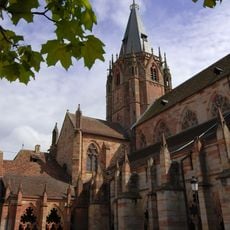
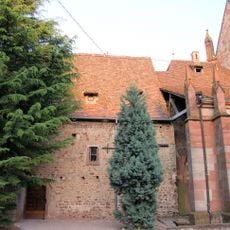
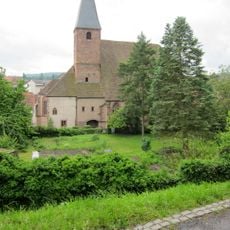
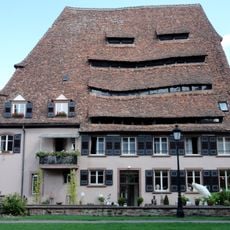
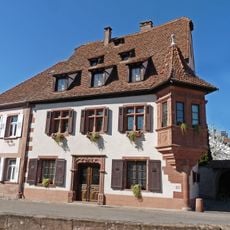
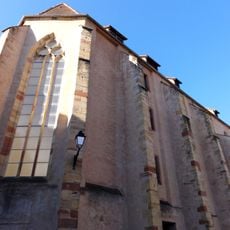
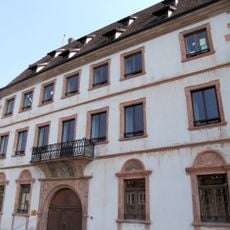
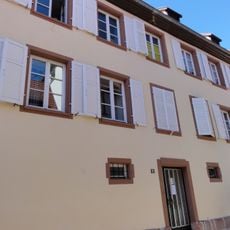
Weissenburg Abbey is a former Benedictine abbey in Wissembourg, Alsace. Its Gothic church, built under Abbot Edelin in the late 13th century, keeps the Romanesque bell tower of the 11th-century church of Abbot Samuel. The tower is reddish-brown stone with a pointed-arch window and a tapering spire with clock faces; the church stands beside a long pale-plastered building with dormer windows under a dark pitched roof.
The monastery was founded in 661 by Bishop Dragobodo and grew wealthy through noble donations over centuries. It transformed from an abbey into a collegiate church in 1524 as religious structures changed.
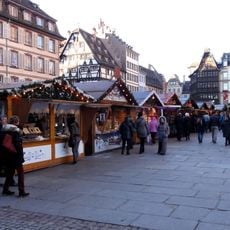
The abbey's name derives from the German Weißenburg, meaning "white castle", Gallicized into Wissembourg. Around 860 the monk Otfrid wrote the Evangelienbuch, a life of Christ in Old High German and the first German poem to use end rhyme instead of alliteration. An annual Christmas fair is held on weekends in Advent around the church.
The former abbey church, now the parish church of Saints Peter and Paul, stands in the centre of Wissembourg and is part of the Route Romane d'Alsace. Its 11th-century Romanesque bell tower survives from Abbot Samuel's church, while the Gothic nave dates from Abbot Edelin's building campaign (1262–1293). An Advent Christmas market is held on the weekends around the church.
A monk called Otfrid wrote an account of Christ's life in Old High German between 863 and 871, making it one of the earliest works in the German language. This text represents a turning point in the history of German literature.
The community of curious travelers
AroundUs brings together thousands of curated places, local tips, and hidden gems, enriched daily by 93,478 contributors worldwide.