Chaos de Montpellier-le-Vieux, Natural rock formation in Aveyron, France.
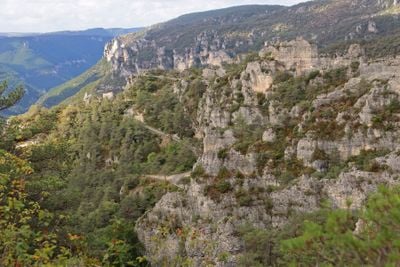
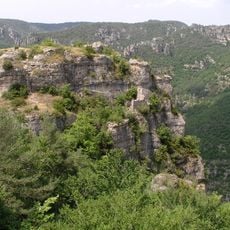
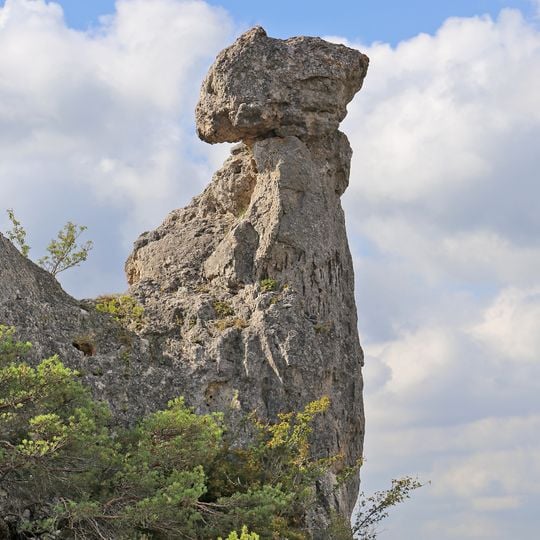
Chaos de Montpellier-le-Vieux, renamed Cité de Pierres in 2019, is a ruiniform dolomite chaos covering about 120 hectares on the Causse Noir, in the commune of La Roque-Sainte-Marguerite. Its stratified grey limestone rises into blocky towers, ledges and rounded outcrops, with dark crevices between them and patches of green vegetation on the rock. Named formations include La Cathédrale, Le Grand Sphinx, L'Avenue des Obélisques and La Porte de Mycènes.
The landscape formed during the Jurassic period millions of years ago when this region was covered by an ancient sea that left behind dolomitic deposits. After the sea retreated, water and frost gradually broke apart and reshaped the rocks, carving out the intricate formations seen today.
The name comes from Rouergat Occitan: shepherds called it "Lo Clapàs Vièlh", the old pile of stones, because the rocks looked like a ruined city; "vielh" also means the Devil in local tales. Édouard-Alfred Martel renamed it Montpellier-le-Vieux in 1883–1884, and in 2019 it became "Cité de Pierres". Medieval legends peopled the chaos with demons, fairies and giants, and few dared enter except to fetch a stray goat or cut wood.
The site has several marked trails of varying difficulty, and maps are available at the entrance along with information about current conditions. Good footwear is essential as paths are uneven and rocky, with some areas potentially slippery especially after rain.
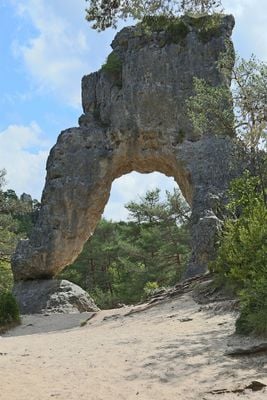
The Arc de Triomphe rock formation is a natural arch that resembles a man-made monument, demonstrating extreme erosion patterns in the dolomite landscape. This uncommon structure resulted from millions of years of water and frost working through the stone in just the right way.
The community of curious travelers
AroundUs brings together thousands of curated places, local tips, and hidden gems, enriched daily by 94,109 contributors worldwide.