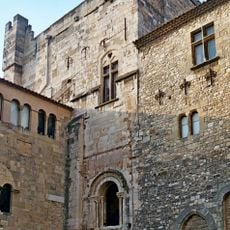
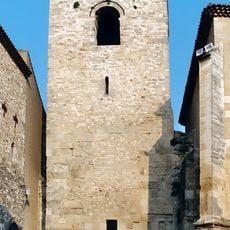
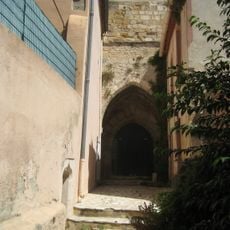
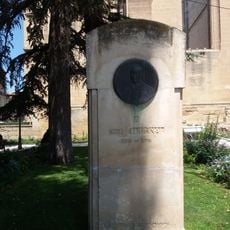
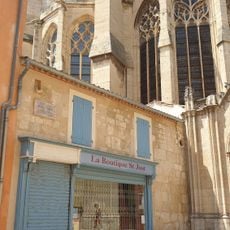
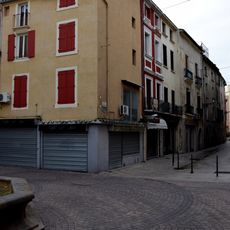
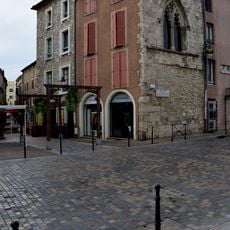
Via Domitia, Roman road between Montgenèvre and Narbonne, France.
The Via Domitia is an ancient Roman road spanning southern France and connecting multiple Roman settlements across the landscape. The route traverses flat terrain and rolling hills, with original stone paving still visible in scattered sections.
Construction began in 118 BC under the proconsul Gnaeus Domitius Ahenobarbus, after the defeat of the Allobroges and Arverni in 122 BC. It was the first Roman road built in Gaul, linking Italy to Hispania via the Col de Montgenèvre and the Durance valley. The colony of Narbo Martius (Narbonne) was founded along the route, and the road was later recorded on the Peutinger Table.
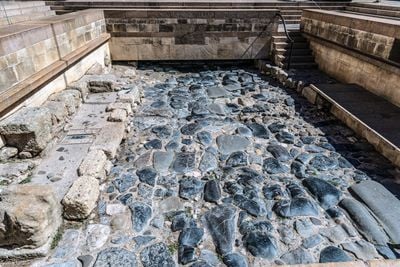
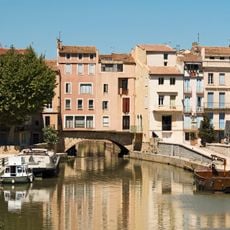
The name Via Domitia honours the proconsul Gnaeus Domitius Ahenobarbus, who commissioned the road. In Narbonne a stretch of the paving is exposed in the Place de l'Hôtel de Ville, and the road crossed the Aude on a seven-arched bridge at the site of the Pont des Marchands. In the Middle Ages the section between Narbonne and Roussillon was still used as the Strata francesa, or French Road.
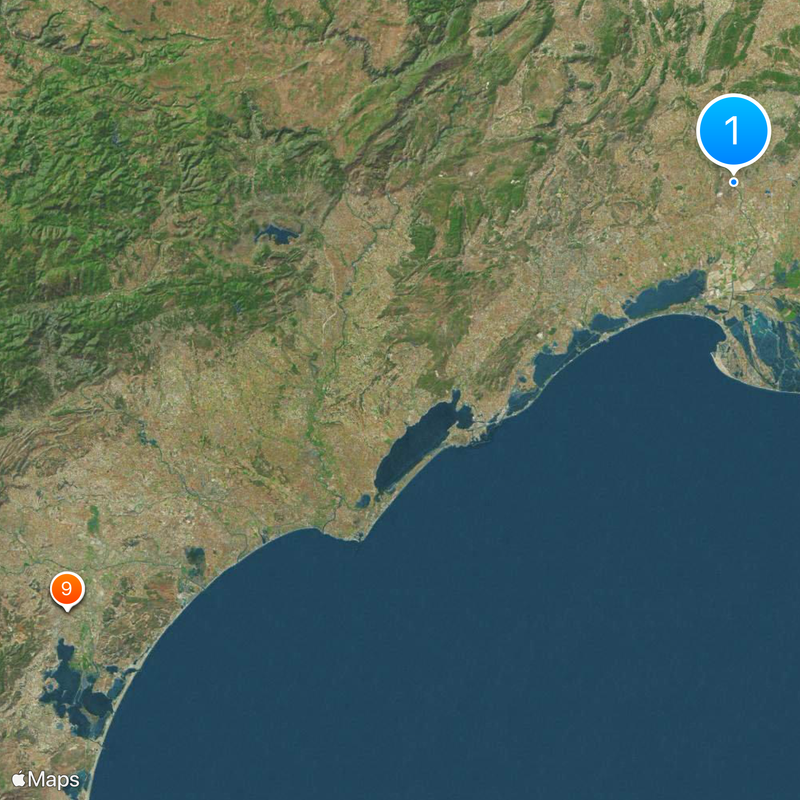
The road runs 780 km from the Col de Montgenèvre (1,850 m) to the Pyrenees, so pick a stretch rather than the whole line. At Narbonne a paved section is exposed in the Place de l'Hôtel de Ville, and the route is followed by parts of the N85, N100 and A9. Elsewhere look for the more than 90 milestones recorded along the way.
At Narbonne, a stretch of the road's paving is exposed beside the Place de l'Hôtel de Ville, and the Via Domitia crossed the Aude on a seven-arched bridge where the Pont des Marchands now stands. Four Roman bridges survive along the route, among them the Pont Ambroix at Ambrussum, the Pont Julien and the Pont Serme.
The community of curious travelers
AroundUs brings together thousands of curated places, local tips, and hidden gems, enriched daily by 93,414 contributors worldwide.