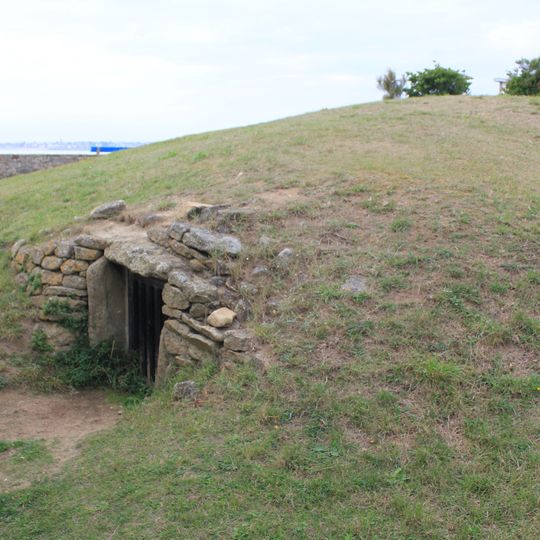
Dolmen de Goëren, dolmen in Gâvres, France
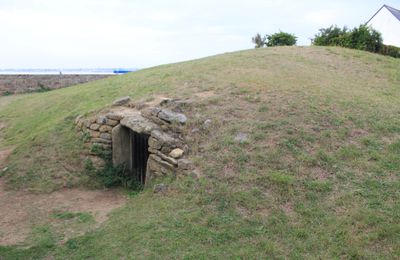
The Goëren dolmen is a stone burial structure at the edge of the Goëren inlet on the Gâvres peninsula, consisting of large flat slabs forming a burial chamber topped by a stone mound and earthen covering. The entire monument stretches about 27 meters long and 16 to 18 meters wide, with a 9-meter access corridor leading to a 17-meter chamber divided into four sections.
The monument was built around 2450 before the common era and ranks among the region's oldest megalithic structures. It was discovered during construction work in 1963 and excavated between 1964 and 1967 under archaeologist Jean L'Helgouach, leading to its classification as a historical monument in 1965 and transfer to state ownership in 1970.
The Goëren dolmen shapes the landscape of the peninsula and reflects how early populations used and marked this coastal area. Visitors today see the site as a window into ancient cultures and it remains central to local identity.
The dolmen is accessible via a straightforward path and can be reached without difficulty by visitors. Information panels at the site explain how the structure was built and what its original purpose was.
The monument features an uncommon L-shaped design with a right-angle layout that was rare for megalithic tombs of this period. Some stones still bear carvings today, partially preserved, offering glimpses into the craftsmanship of this ancient civilization.
The community of curious travelers
AroundUs brings together thousands of curated places, local tips, and hidden gems, enriched daily by 92,215 contributors worldwide.