Béziers amphitheatre, Roman amphitheatre in Saint-Jacques district, Béziers, France
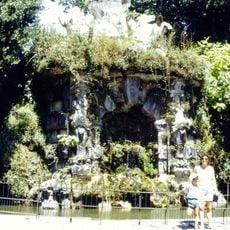
The Béziers amphitheatre is a Roman arena built into the western flank of the Saint-Jacques hill in the southern part of ancient Baeterrae. Its ruins lie partly in a public garden, with excavated seating rows, vomitoria, an annular gallery 3.78 m wide and column fragments now visible. The outer facade was a two-storey run of arcades framed by columns and pilasters, reaching up to 17 m; much of the structure was cut into the rock.
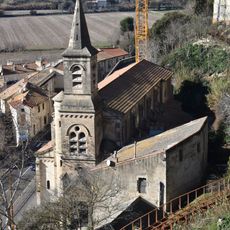
The amphitheatre was built in the 1st century AD in the southern part of the Roman colony of Baeterrae, against the Saint-Jacques hill. It was abandoned by the end of the 3rd century. In the Middle Ages it served as a stone quarry, notably for the 12th-century church of Saint-Jacques, and potters' kilns were dug into its walls. Excavated and cleared between 1987 and 2005, it was listed as a monument historique on 16 May 2013.
The arena held up to 13,700 spectators, according to measurements from two decades of surveys. In August 1892 music from "Parizatis", written for a drama by Jeanne Dieulafoy, was performed on its stage. Today the ruins lie in a public garden, and a medieval alley follows the line of one of the vomitories.
Access is by prior arrangement with the tourist office, not on a daily drop-in basis. To reach the ruins, walk along Rue du Moulin à Huile; for a view over the site from above, take Rue des Anciennes Arènes. The excavated area has uneven ground and stone steps.
Markings in the surrounding streets outline the original footprint of the arena, showing how this ancient site is woven into modern urban planning. This helps visitors grasp the full scale and scope of what once stood here.
The community of curious travelers
AroundUs brings together thousands of curated places, local tips, and hidden gems, enriched daily by 93,800 contributors worldwide.