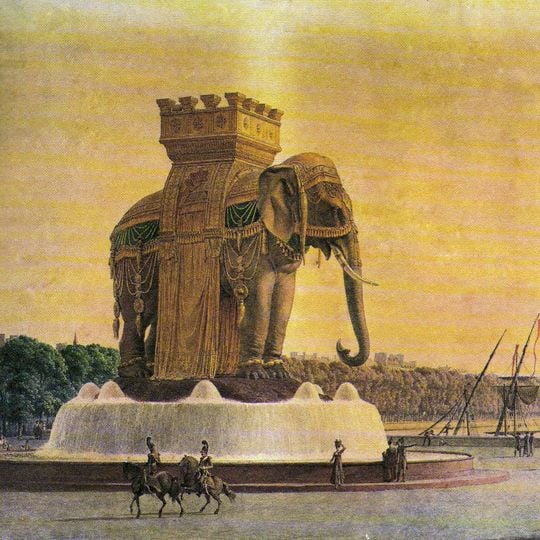
Elephant of the Bastille, Monument in Paris
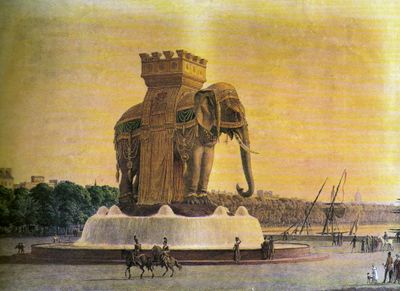
The Elephant of the Bastille was a monumental fountain design meant to occupy the Place de la Bastille in Paris, intended to be built in metal as a grand public structure. The project represented ambitious architectural dreams of the early 19th century, though it never took final form.
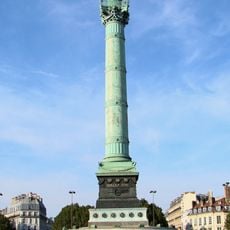
The project originated in 1808 under Napoleon's commission as a symbol of his power and ambition for Paris. A full-scale plaster model stood on the site from 1814 to 1846, but the structure was eventually dismantled, and the July Column took its place.
The elephant monument lives on in Parisian culture through its appearance in Victor Hugo's novel, where it symbolizes forgotten dreams and hidden places. The memory of this structure persists in local stories and literary tradition, even though the physical building no longer exists.
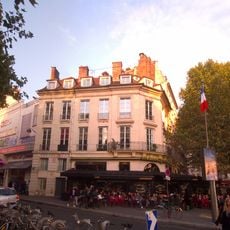
The original monument no longer exists, but the site is easy to locate on the Place de la Bastille in eastern Paris, now marked by the July Column. Visitors can explore the history of the location by walking the surrounding area and visiting nearby museums that hold information about this forgotten project.
The project was meant to demonstrate that even the boldest dreams could be realized, but the plaster model was later found to be unwieldy and impractical for daily city life. Today, only literary references and old city maps hint at this ambitious yet ultimately failed vision.
The community of curious travelers
AroundUs brings together thousands of curated places, local tips, and hidden gems, enriched daily by 90,899 contributors worldwide.