Machine de Marly, Water pumping station in Bougival and Louveciennes, France
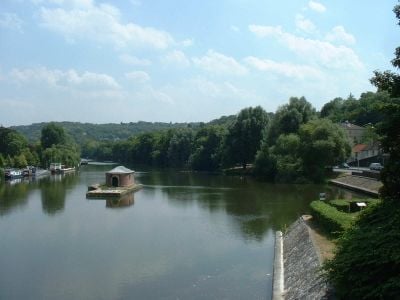
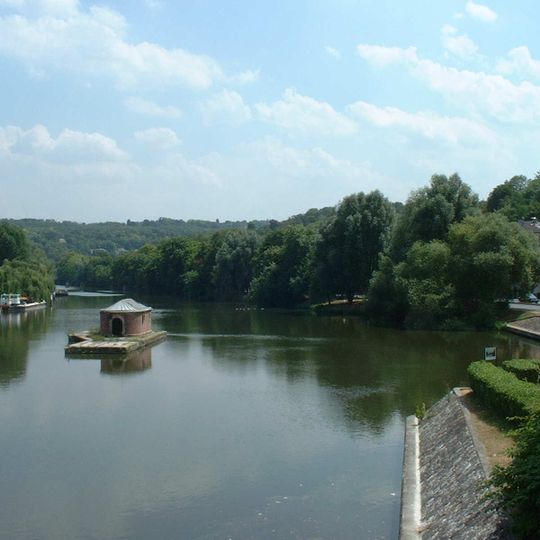
The Machine de Marly was a hydraulic pumping system on the Seine at Bougival, built of timber and stone. Fourteen water wheels, each about 11.5 metres in diameter, drove more than 250 pumps that raised river water in three stages to the Louveciennes aqueduct, some 160 metres above the river. A pale stone retaining wall and massive timber trusses formed its base.
Work on the hydraulic system started in 1681 during the reign of Louis XIV, with engineers Arnold de Ville and Rennequin Sualem completing it in 1684. The original wooden structure operated for about 133 years before steam engines replaced it in 1817.
The machine drew its name from the Château de Marly, whose gardens consumed most of the water it raised, while Versailles fountains ran at half pressure. Diderot praised it in the Encyclopédie in 1751 as a work that would always honour its inventor despite its faults. It became a tourist attraction in its own right.
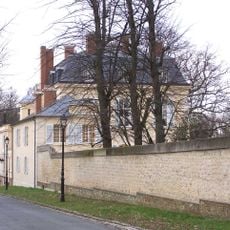
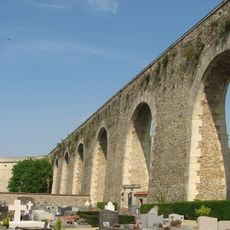
The surviving buildings stand along quai Rennequin-Sualem in Bougival, with the Louveciennes reservoirs and aqueduct on the opposite hillside. François Cécile's 1812–1819 engine house, the 1819–1825 workshops and forge, and Dufrayer's 1859 brick structure can be seen from outside. The site is private and serves the Versailles and Saint-Cloud water service, so visitors view the structures from the public road.
The original system worked entirely by water power, with no modern engines or external power sources, making it an engineering marvel for its time. The engineers solved difficult problems solely by cleverly using river flow and gravity.
The community of curious travelers
AroundUs brings together thousands of curated places, local tips, and hidden gems, enriched daily by 93,448 contributors worldwide.