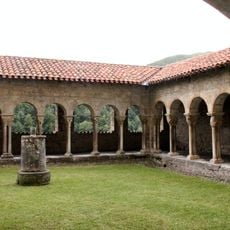
Lugdunum Convenarum, Roman city in France
Lugdunum Convenarum is the remains of a Roman town in present-day Saint-Bertrand-de-Comminges in France and shows the traces of a settlement that served as a key regional center. On the ground you can see sections of old streets, walls, a bath complex, a theater, and building foundations that reveal how the ancient city was laid out.
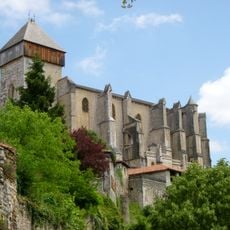
The city was founded in the first century under Emperor Augustus and grew into a busy trading center with a forum, temples, and public baths. In the fifth century a protective wall was built around the upper part, and later in the Middle Ages a new center formed around a cathedral built by Saint Bertrand.
The site's name derives from the Celtic god Lug and the Convènes people, reflecting a place where Celtic and Roman cultures met. Visitors can see how Roman ways blended with local traditions through the remains of temples, markets, and public buildings.
The excavated area lies in the plain below the medieval village of Saint-Bertrand-de-Comminges, near the Garonne. Visitors walk between low wall foundations and gravel floors, so sturdy shoes help. Excavation campaigns have run since 1913, and since 2015 a field school from the University of Lille has dug the burial grounds on the city's outskirts, so some sectors may be closed during work.
The macellum here was the largest known market building in the western Roman Empire, which shows how much trade passed through the city. The town also appears on the Antonine Itinerary and the Peutinger Table, two Roman road lists, so travellers crossing between Gaul and Spain could find it on their route.
The community of curious travelers
AroundUs brings together thousands of curated places, local tips, and hidden gems, enriched daily by 94,326 contributors worldwide.