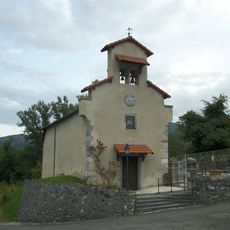
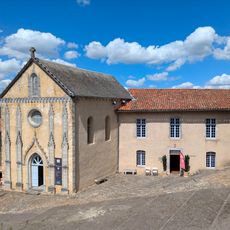
Saint-Bertrand-de-Comminges Cathedral, Former cathedral in Saint-Bertrand-de-Comminges, France
Saint-Bertrand-de-Comminges Cathedral is a house of worship in the French Pyrenees built across multiple periods. The interior combines Romanesque foundations with Gothic vaulting and Renaissance decorative details into a layered architectural whole.
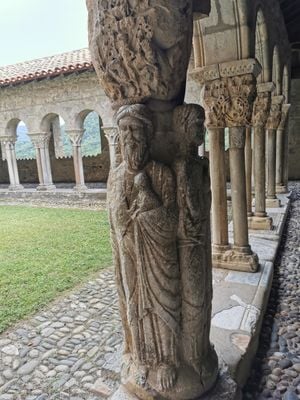
Bertrand de l'Isle, bishop of Comminges from 1083, rebuilt the cathedral and its cloister on the acropolis of a Celtic oppidum above the Roman city of Lugdunum Convenarum, not on its ruins. In 1307 Bishop Bertrand de Goth, later Pope Clement V, laid the first stone of the Gothic choir; Hugues de Castillon completed the construction in the mid-14th century. The relics of Saint Bertrand, hidden in a well by a Huguenot soldier in 1586, were bought back by canons of Lectoure and returned in 1591.
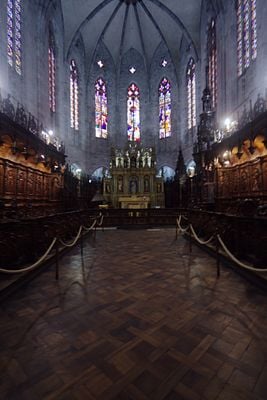
The 67 oak and walnut choir stalls were commissioned by Bishop Jean de Mauléon (1523–1551). They depict characters from the Old and New Testaments, including scenes of temptation, envy and lust, and are often attributed to Nicolas Bachelier or his school. Representations of the Song of Roland, with Oliver clearly shown, appear inside the sanctuary.
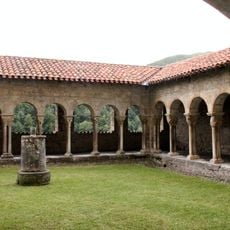
The nave runs 55 m long, 16 m wide and 28 m high, with the choir stalls flanking the central floor behind a low stone barrier and a rope strung between posts along them. The 12th-century bell tower stands inside the nave itself, so look up rather than outside for it. The cloister, with its single vaulted north gallery, looks out over the Garonne valley.
An unexpected find hangs high in the vault: a preserved crocodile from centuries past. This unusual object reflects a time when exotic specimens were regarded as wonders and preserved as curiosities.
The community of curious travelers
AroundUs brings together thousands of curated places, local tips, and hidden gems, enriched daily by 94,527 contributors worldwide.