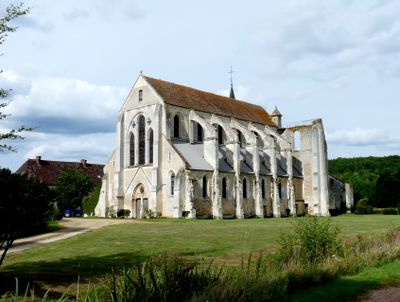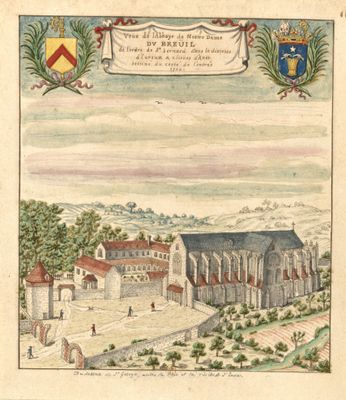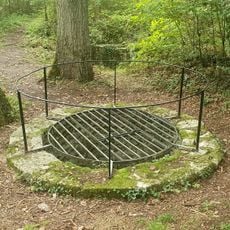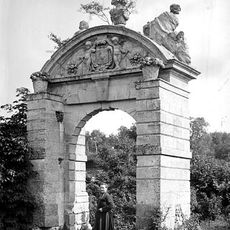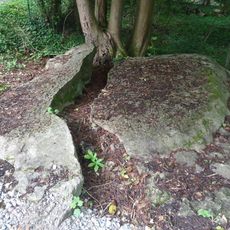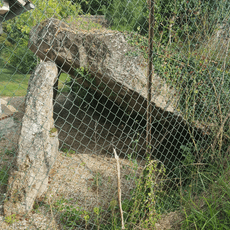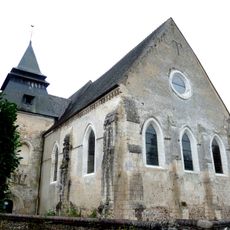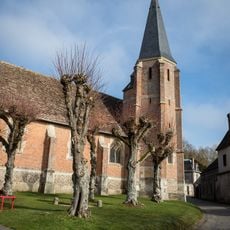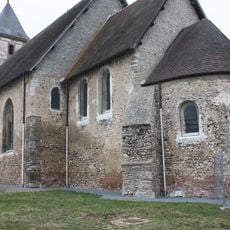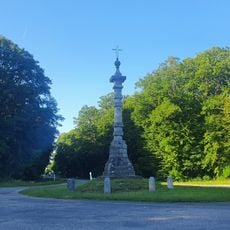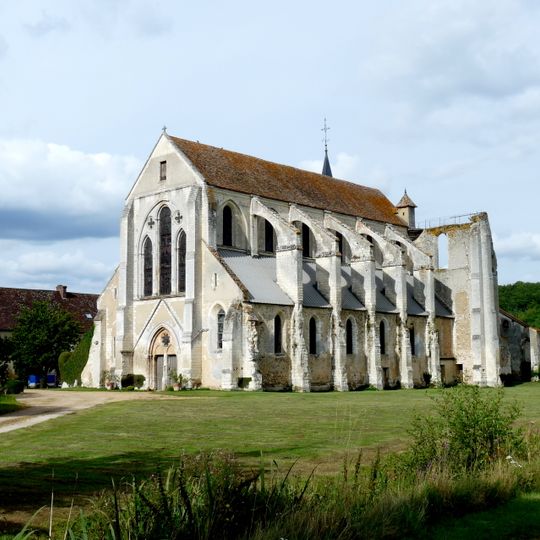
Le Breuil-Benoît Abbey, 12th-century Cistercian abbey in Marcilly-sur-Eure, France.
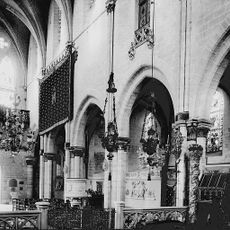
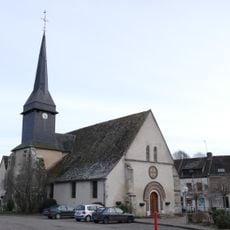
Le Breuil-Benoît Abbey is a 12th-century Cistercian monastery in Marcilly-sur-Eure featuring a church with characteristics typical of medieval religious architecture in northern France. The structure preserves multiple nave sections and displays the building methods that defined monastic construction of its era.
Founded on 8 May 1137 by Foulques de Marcilly with monks from Vaux-de-Cernay, the abbey joined the Savigny congregation and in 1147 passed to the Cistercians as a daughter house of Clairvaux. In 1421 troops of Henry V of England burned the church and killed the monks. Dissolved in 1790, it was partly demolished; the surviving church was restored from 1842 and reconsecrated in 1854.
The abbey's name comes from the Benedictine rule it followed at its founding in a spot called Le Breuil, Latinised as Brolium Benedicti. The abbey church, dedicated to Mary and Saint John the Baptist, was consecrated in 1224 by the bishops of Évreux and Chartres. In 1421 troops of Henry V of England burned the church and killed the monks.
The building underwent major restoration work beginning in 1995 and sections are accessible to visitors, particularly during special heritage events. Check ahead before visiting to confirm which areas are currently open, as access may vary depending on ongoing conservation efforts.
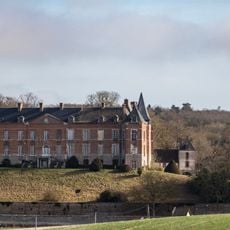
Gustave de Reiset, whose brother Frédéric directed the Louvre, bought the abbey and restored it from 1842, fitting out a museum in the abbot's house, the church and the conventual outbuildings. After his death in 1905 and his widow's in the 1920s, the collections were partly sold off, notably in 1922. A long Venetian-school painting, The Feast in the House of Levi, once owned by Cardinal Fesch and then by Reiset here, reappeared at auction in Alençon on 26 October 2019.
The community of curious travelers
AroundUs brings together thousands of curated places, local tips, and hidden gems, enriched daily by 95,596 contributors worldwide.