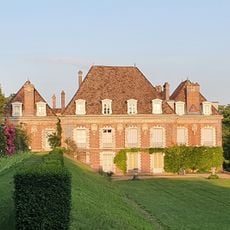
Fort-Harrouard, Archaeological site in Sorel-Moussel, France.
Fort-Harrouard is an archaeological site situated on an elongated hilltop near the Eure River, protected by steep natural slopes. The northern portion displays clear defensive features including a deep trench and remnants of ancient wooden constructions.
Fort-Harrouard was occupied from the Middle Neolithic to the second Iron Age (La Tène), with occasional use into the Early Middle Ages. Abbot Philippe excavated the site in the first half of the 20th century, finding many remains and a single Iron Age chariot burial on the western side. Jean-Pierre Mohen and Alain Ville resumed work from 1983 to 1988, completing study of the well and rampart.
The site's name refers to the Fort Harrouard, and the finds are split between two museums: most of the archaeological material is held at the Musée d'Archéologie nationale in Saint-Germain-en-Laye, while the Musée Marcel Dessal in Dreux keeps the pottery unearthed here. The hill was classed as a monument historique on 10 July 1934.
The site can be explored on foot, with the northern fortification being the most accessible starting point. Wear sturdy shoes as the hilltop terrain is uneven and some slopes are steep.
The only burial found at Fort-Harrouard is an Iron Age chariot grave on the western side of the site, excavated by Abbé Philippe in the first half of the 20th century. The rest of the site's many finds were scattered objects, not tombs.
The community of curious travelers
AroundUs brings together thousands of curated places, local tips, and hidden gems, enriched daily by 92,778 contributors worldwide.