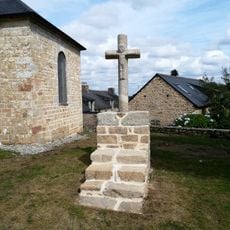
Abbaye Notre-Dame de Carnoët, Medieval abbey ruins in Clohars-Carnoët, France
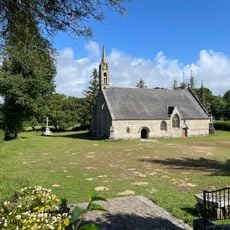
Abbaye Notre-Dame de Carnoët is a ruined monastery standing near the Laïta River, with stone walls and Gothic architectural details still visible among the surrounding woodland. The site contains the remains of several buildings that once formed the working community of the abbey.
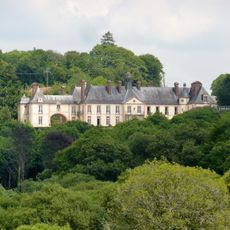
Founded between 1170 and 1177 by Maurice Duault, abbot of Langonnet, with a donation from Duke Conan IV, the abbey was rebuilt in the 17th century under Abbot Guillaume Riou. Abandoned during the French Revolution, it was sold as national property, partly quarried, and partly turned into a château in the 19th century. German troops occupied it in World War II, and a fire on 20 April 1945 destroyed the château, which was razed in 1953 except for the 13th-century chapter house and chartrier.
The abbey takes its name from Maurice Duault, abbot of Langonnet, who founded it in 1177 and died in 1191; his tomb in the abbey church became a pilgrimage focus. The abbey later held a relic of his right humerus, transferred in 1880 to Langonnet before 20,000 faithful. Today the abbey farm hosts an exhibition on Cistercian life.
The 123-hectare estate is managed by the commune of Clohars-Carnoët, which handles visitor reception; the abbey farmhouse holds an exhibition on Cistercian life and the site's history. Two dikes were raised to shield the ruins from the Laïta, though the chapter house would be temporarily submerged by a one-metre rise in water. The wooded banks of the river are a favoured walking route.
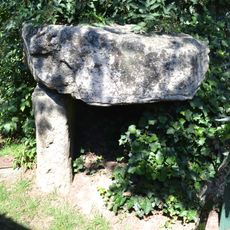
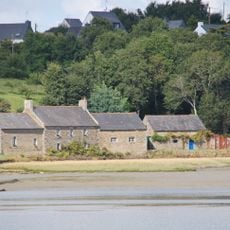
The chapter house and the chartrier from the 13th century survive, along with the abbey farm, whose attic shelters a colony of greater horseshoe bats shown by infrared camera. The site also keeps the 17th-century church pediment and an 18th-century orangery, and Iron Age fortification remains lie in the forest around it.
The community of curious travelers
AroundUs brings together thousands of curated places, local tips, and hidden gems, enriched daily by 93,665 contributors worldwide.