Triumphal Arch of Orange, Roman triumphal arch in Orange, France
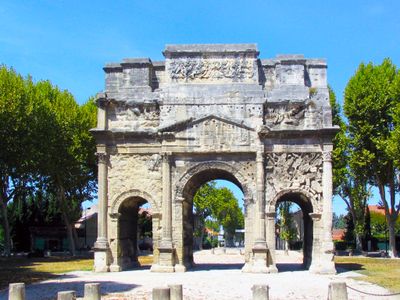
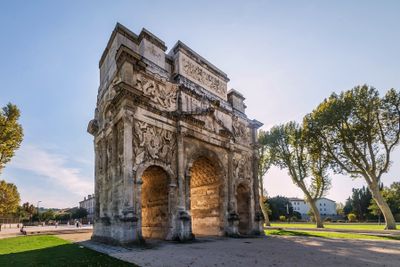
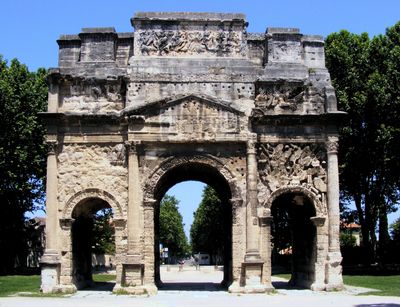
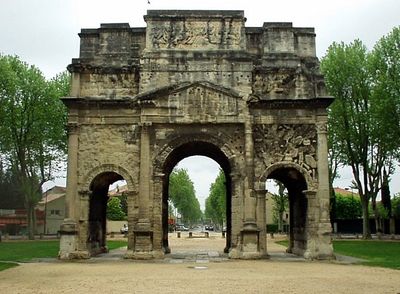
The Triumphal Arch of Orange is a Roman monument featuring three passages, with the central opening noticeably wider than the side entrances. The entire structure rises from carved limestone and displays detailed relief carvings across all its surfaces.
The structure was built between 10 and 25 AD under Emperor Augustus and was later reshaped under Emperor Tiberius. These alterations honored victories in Germanic territories and repurposed the monument for new commemorative goals.
The limestone surfaces display carved scenes of Roman soldiers, naval vessels, and combat against Germanic and Gallic peoples. These reliefs tell the story of military victories that were important to those who built it.
The arch stands on the former via Agrippa, now the axis of avenue de Langres at the northern entry to Orange, with traffic passing close by. Drainage work from 2015 to 2017 cleared standing rainwater at its base, trees were felled and the road realigned so vehicles keep their distance. Adjustable lighting installed then can colour the stone, including in the blue, white and red of the French flag.
This monument stands as one of the earliest examples of triumphal arch design and later influenced major Roman structures like the Arch of Constantine. This architectural precedent demonstrated an effective way to shape such commemorative buildings.
The community of curious travelers
AroundUs brings together thousands of curated places, local tips, and hidden gems, enriched daily by 93,492 contributors worldwide.