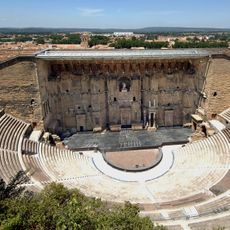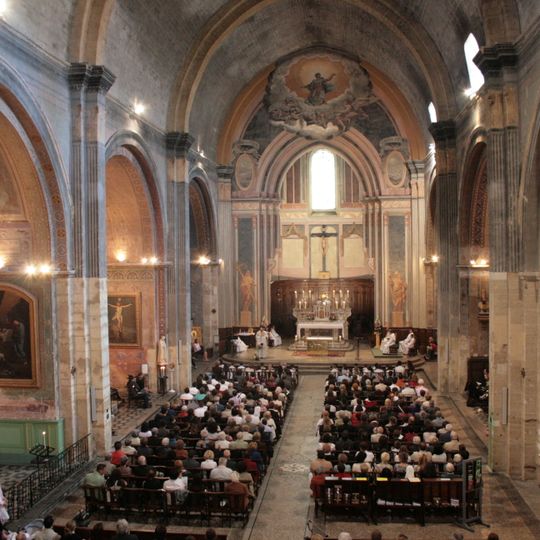
Orange Cathedral, Roman Catholic cathedral in Orange, France.
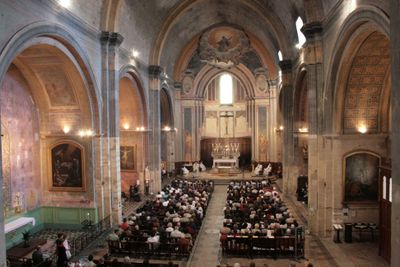
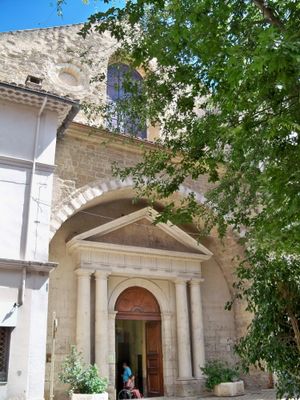
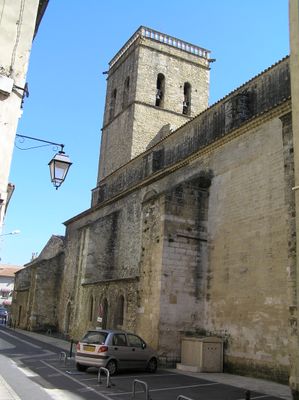
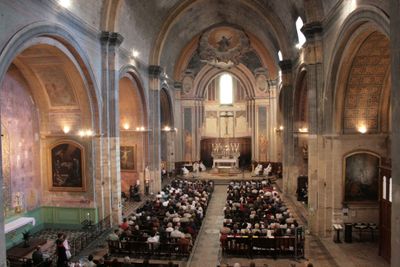
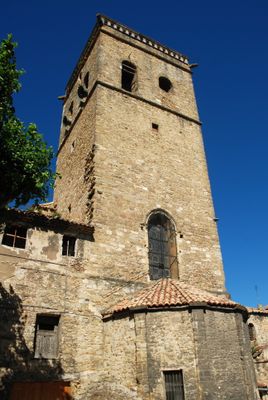
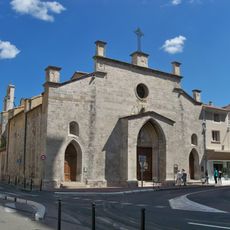
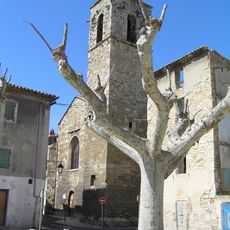
Orange Cathedral is a former Roman Catholic cathedral built from the 12th century in the Romanesque style, with a five-sided chevet, a tall square bell tower of rough stone blocks, and a south portal carved with acanthus capitals and antique-style friezes. Inside, grey stone columns with carved capitals rise to pointed arches, and a semi-dome above the apse shows a figure in a circular mandorla.
A church was consecrated here in 528, and the present building was begun by Bishop Aimar Bérenger de Morges between 1107 and 1127. In 1562 Huguenots seized it, burned the retables and statues, and carried off the Gallo-Roman marble baptismal basin. Re-consecrated in 1599, it lost cathedral status when the Concordat suppressed the Diocese of Orange in 1801.
The name Notre-Dame-de-Nazareth refers to the Virgin Mary of Nazareth. The church keeps seven side chapels: Saint Eutrope, the Sacred Heart, Saint Joseph and Saint Anthony of Padua on the left; the Virgin Mary, Saint Anne and the Blessed Martyrs of Orange on the right. The bell tower holds four bells dated 1338, 1637, 1856 and 1871, the largest weighing 1,100 kg.
The building sits in central Orange and is easy to reach on foot; visitors should be respectful during regular worship services and religious ceremonies. It is wise to check opening times in advance to ensure entry is possible at your planned visit time.
During the French Revolution, the cathedral was converted into a secular temple dedicated to the Goddess of Reason, an unusual purpose for a sacred building. This transformation reveals how deeply religious institutions were affected by the political turmoil of that era.
The community of curious travelers
AroundUs brings together thousands of curated places, local tips, and hidden gems, enriched daily by 94,020 contributors worldwide.