Parc Jean-Jacques Rousseau, English garden in Ermenonville, France
Parc Jean-Jacques Rousseau is an English garden in Ermenonville that spans over sixty hectares of natural settings including forests, meadows, rivers, and ponds. These landscapes are connected by philosophical structures and monuments distributed throughout the grounds.
René-Louis de Girardin (1735–1808) used an inheritance received in 1762 to reshape the marshy Ermenonville estate, hiring two hundred English workers; drainage and construction took about a decade. He drew on Rousseau's 1761 novel Julie, or the New Heloise and on Addison, Pope and Shaftesbury, and set out his ideas in his 1777 essay De la composition des paysages. Rousseau stayed from May 1778 and died there on 2 July 1778; he was buried by torchlight on 4 July on an island in the park, and his remains were moved to the Panthéon in 1794.
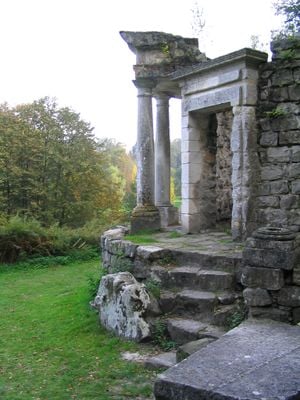
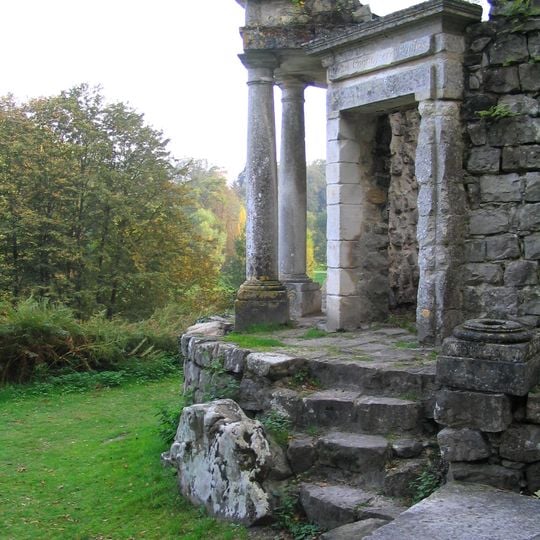
Girardin filled the grounds with fabriques, small built features meant to stir feeling: grottoes, ruins and a temple. The name of the park is recent and not historical; the landscape itself was laid out from 1763 onward. Rousseau stayed in a cottage in the garden from May 1778 and died there on 2 July 1778.
The grounds are accessible from April through October with paths leading through various landscaped sections, particularly in the southern area. Visitors should wear sturdy footwear, as trails pass through woods and meadows.
The stone ruin in the photograph carries an inscription naming "l'aimable ... de J.J. Rousseau", one of the park's fabriques, the built follies Girardin defended against his gardener Jean-Marie Morel, who wanted more left to nature. Girardin argued such structures drew people back toward nature; the two men ended their collaboration over this disagreement.
The community of curious travelers
AroundUs brings together thousands of curated places, local tips, and hidden gems, enriched daily by 93,940 contributors worldwide.