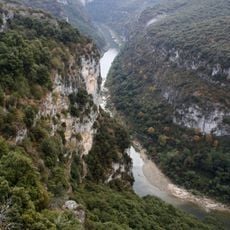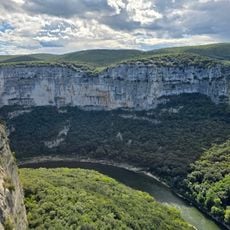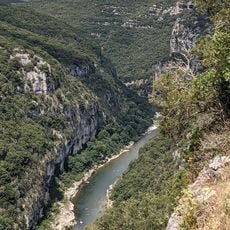
Cave Saint-Marcel-d'Ardèche, Natural cave system in Bidon, France.
Cave Saint-Marcel-d'Ardèche is a natural cave system near Bidon featuring approximately 64 kilometers of underground passages. The limestone displays formations and natural galleries shaped by water erosion over thousands of years.
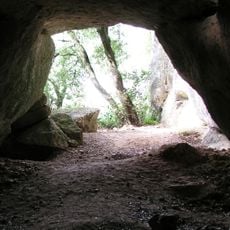
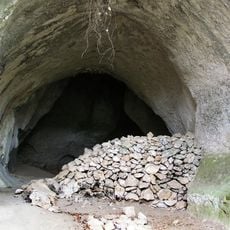
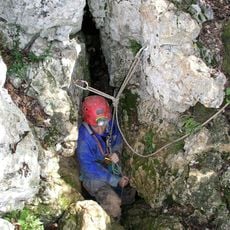
The natural entrance was rediscovered in 1838 by a hunter from Aiguèze following a wounded rabbit. In 1838 the mayor, the Marquis de Bernis, organised two guided visits a week to stop looting. The cave was classified as a monument historique in 1934, and opened to the public through a 122-metre access tunnel on 27 May 1989.
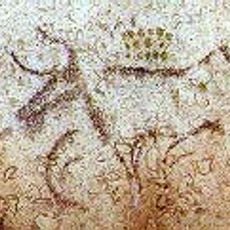
The first chamber is called the Fountain of the Virgin, after a limestone formation resembling stacked cauliflowers; dripping water gives the "fountain" its name. Some cavers saw in it a figure of Mary with the child Jesus. A copy of a wall painting of a cow and two goats, dated to 20,000 BC, is on the wall; the original, found in 1963, is in a gallery closed to the public.
Guided tours last about one hour and include sound and light presentations along marked pathways. Informational panels in French and English help with orientation through the underground passages.
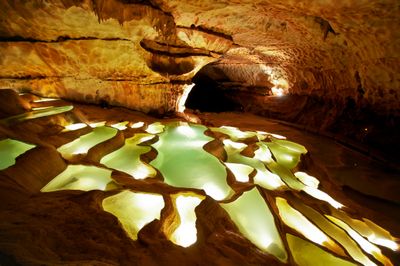
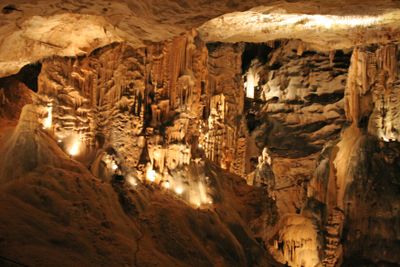
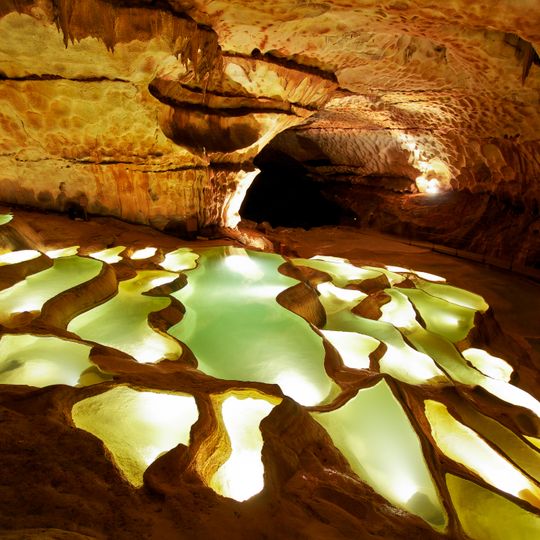
The Gours are not a waterfall but a set of calcite basins: lime-rich water deposited thin successive layers across the sloping rims, dividing shallow pools. Source 2 calls this formation unique in Europe for the number, varied shapes, depth and surface area of its basins. The visit ends in the Cathedral hall, named for formations resembling a tabernacle and organ pipes.
The community of curious travelers
AroundUs brings together thousands of curated places, local tips, and hidden gems, enriched daily by 93,520 contributors worldwide.