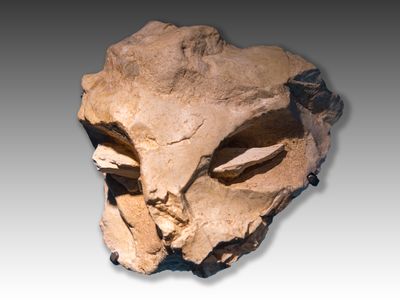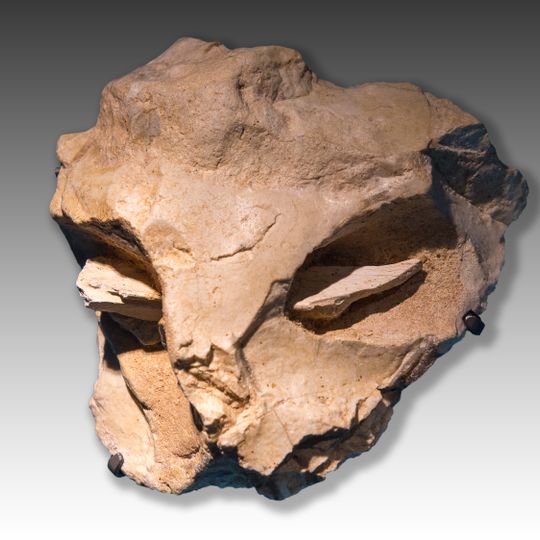
Mask of la Roche-Cotard, Stone artifact in Langeais, France.
The Mask of la Roche-Cotard is a stone artifact made from flint with a triangular shape. A bone fragment has been inserted through a natural cavity in the stone, creating a face-like appearance.
This artifact originates from the Mousterian period approximately 75,600 years ago, representing one of the oldest known examples of Neanderthal creativity. It demonstrates that early humans possessed the ability to deliberately create three-dimensional symbolic objects.
The mask reveals how Neanderthals shaped objects for purposes beyond survival, suggesting they engaged in symbolic or representational thinking. This practice indicates a level of cognitive complexity previously underestimated by researchers.
This artifact is displayed in a museum setting where visitors can view it from a safe distance behind protective glass. Plan your visit with enough time to examine the fine details of the stone carving and bone insertion carefully.
The artifact may have been deliberately crafted to resemble a face or mask, suggesting it held special meaning for its creator. Its true purpose remains mysterious and continues to challenge archaeologists' understanding of prehistoric symbolism.
The community of curious travelers
AroundUs brings together thousands of curated places, local tips, and hidden gems, enriched daily by 60,000 contributors worldwide.